
Up until the first days of September the news around the Middle East were mostly ruled by two topics. The war between Iran and the U.S. with the Strait of Hormuz in focus, and the militry atrocities of Tel Aviv in Palestine, Lebanon and Syria.
In light of all this a great number of assessment also dedicate serious attention about the probable reaction of the Gulf. How will they adapt to the new conditions after the war, when Washington will expectedly withdraw from the region, or at the very least weakens significantly. In other words, when the former defense architecture crumbles and America will leave these states to their fate. And when in fact American within the close future withdraws, or significantly weakens, how will they cope with Iran being free from the sanctions and getting out of the war much stronger militarily and economically. Because eventually they have to learn to live with this new reality. And there are unmistakable signs for all this. It scheduled that by 30 September all Western, including American forces should leave Iraq, and the American bases so far scattered all around the Gulf suffered so severe damages that a possible reconstruction would take years and billions of dollars. To which there are no available funds, nor the real will.
Compared to these concerns Yemen, or Sudan practically grabbed no attention, at least until last week. And though there is attention now, that will soon set aside. Which is very understandable.
However, what has unfolded now in Yemen has a massive impact on the whole region. Because Sana’a turned the table completely. And if the current military operation is successful and the gains can be held, its Sana’a’s control over the Bāb al-Mandib will be complete, Riyadh’s influence in Yemen will collapse and that will affect the region.
This is not all that big of a surprise. What happened now was brewing for a while. But now the domino has started and it is very hard to predict where will it stop.
The setup until December 2025
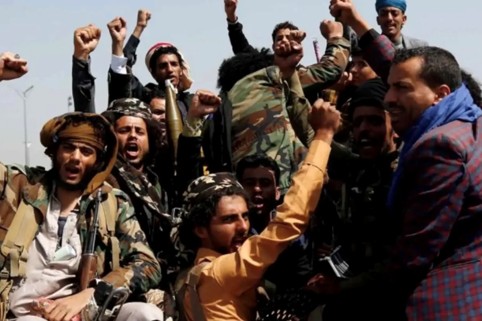
During the so called “Arab Spring” the Yemeni government thus far based on a very fragile balance of interests collapsed. In result of the caused chaos and the political vacuum the Anṣār Allah Movment led by the al-Ḥūtī clan took power in Sana’a in early 2015, ended the coalition government ruling until then and formed its own revolutionary government. Which still governs Sana’a and much of Northern Yemen.
In response to all this the head of the former coalition government, which enjoyed the support of the Gulf states, Manṣūr Hādī escaped to Aden and requested the direct intervention of the these states in the name of the formally still existing government. A broad coalition including all Gulf and some other Arab states, but primarily led by the Saudi and the Emirati armies started a war to break Anṣār Allah and retake Sana’a. It is an interesting and important notion that the former president ‘Alī ‘Abd Allah Ṣāliḥ, who had ruled Yemen for decades at this time was an ally of the Anṣār Allah Movement. Which gave legitimacy, but also support from much of the cadres of the former unified Yemeni Army. Up until 2017, when this relation broke and in the ensuing clashes the Anṣār Allah eliminated Ṣāliḥ.
Yet the anticipated Saudi victory did not happen, the Anṣār Allah firmly held its ground and eventually most members of the coalition, starting with Morocco and Egypt, quietly withdrew from it. And since the Saudi and Emirati capabilities are very limited despite the impressive numbers, this militry presence was increasingly built upon mercenaries, auxiliaries from Sudan, and on the expanding elements of al-Qā‘ida and Dā‘iš. A relentless was continued on multiple fronts and the local allegiances changed several times.
Though the Saudi-Emirati military intervention could not take Sana’a, it could prevent the Anṣār Allah to move into South Yemen. And on that it largely built on the nostalgia and separatist sentiment for the southern state, but also on radical elements. But just because these sides agreed on opposing Anṣār Allah that did not mean that they would represent a unified block, nor that they would have the same vision, or goals. Meaning that even in areas not controlled by Sana’a, there was a relentless and growling rivalry.
Riyadh’s original objective was a fast and impressive victory , which would have boosted the image of Prince Muḥamamd ibn Salmān, who at that time was just Defense Minister and third in line for the throne. By now he is the Crown Prince and the de facto ruler of Saudi Arabia. As the military adventure turned into a humiliating setback, Riyadh’s objectives also changed. The most desired plan was to unite Yemen under a Saudi controlled puppet government, but if that was not possible a satisfactory peace was also acceptable. At least until circumstances changed for the better.
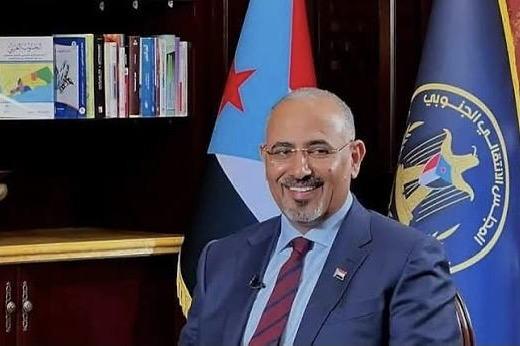
The Emirates, however, had its mind set on a separate southern state, which it would break away from Sana’a and pull under its own control. In exchange Riyadh would gain control over the northern part, which is more densely populated and anyways represent a bigger concern for Riyadh. The ideal partner for that was the Southern Transitional Council led by ‘Aydarūs az-Zubaydī, which also had the agenda to recreate the former sovereign southern state. The Emirates eventually took control over the Island of Socotra – part of Yemen at the southern exit of the Bāb al-Mandib -, where it built a massive airbase together with the Tel Aviv regime. And this the newly set up southern state was planned to be a puppet regime of the Emirates, and a testing ground for the Emirati-Israeli alliance. That is the same role they still plan for Somaliland, recently carved out from Somalia.
At the same time, in the inner, more populated regions the local branch of al-Qā‘ida, the Iṣlāḥ (Reform) Partly and Dā‘iš groups took direct control, often waging wars against each other as well, pulling in radical elements from all over the Arab and Muslim world. The loyalty and the relations of these groups with each other often changed, but both Riyadh and Abū Zabī used them more or less from time to time, based on the conditions, as there was a general consensus among them against Anṣār Allah.
The constant hostility was brought to a halt with a ceasefire in 2022. All parties could keep their territories controlled at that point and a ceasefire started on all fronts with theoretical free movement for citizens between all regions. Riyadh changed Hādī and a Presidential Leadership Council was formed led by Rašād al-‘Ulaymī. That involved the Southern Transitional Council and the Iṣlāḥ Party as well. All parties agreed to a roadmap with the aim to achieve the unification of the state and all its institutions, to restore normality by dialogue and constant negotiations. Though this peace initiative eventually broke down and Saudi Arabia did not lift he blockade imposed on Sana’a, the ceasefire held until 2026, despite the occasional airstrikes. During this period the Anṣār Allah tactfully used the time from late 2023 to launch missile strikes against the Tel Aviv regime, which made it practically untouchable for most Yemeni sides.
So, with all that by the beginning of 2023 a fragile, but fairly clear equation came to be. In the North and the northern part of the western coastline until the city of Ma’rib the Anṣār Allah was in control, enjoying the support of Iran.
The Emirates officially pulled out in July 2019 from Yemen, in reality as a supporter of the Southern Transitional Council it kept a very strong presence in the southern coastline and kept Socotra.
Riyadh remained the only official present foreign militry force and held control over of the Presidential Council at Aden under al-‘Ulaymi. The real power on the ground behind both the Presidential Council and the Southern Transitional Council, however, was the Iṣlāḥ Party. A loose mercenary force, which was ready to join either side, depending on the conditions.
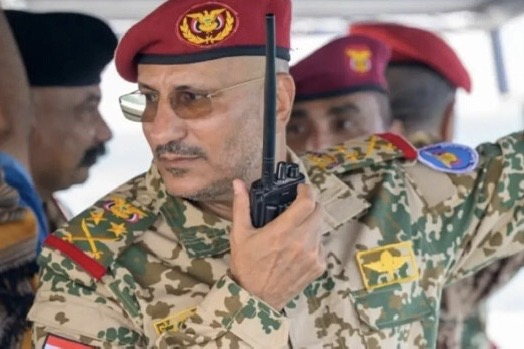
There was still power center centered around Ta‘izz, somewhat separate from both the Saudi and the Emirati blocks. Ṭāriq Ṣāliḥ, nephew of former President ‘Alī ‘Abd Allah Ṣāliḥ formed his own power base around here, largely built on the supporters of the former president and the officers of the former unified army, who wanted to take revenge on the al-Ḥūtīs for killing ‘Abd Allah Ṣāliḥ. The center of Ṭāriq Ṣāliḥ‘s control area was Ta‘izz and the coastal region until the Bāb al-Mandib. And even though he had excellent relations with both the Saudi and the Emirati blocks, he was not really a direct puppet for any of them. He largely kept away from the fights in 2020-22 as well.
Therefore there were four main actors in Yemen at the end of 2025, from which Anṣār Allah controlling Sana’a was one, while the other three in theory formed one alliance. Though it was more a block with rivaling factions, massively built on mercenaries, Saudi and Emirati money and arms and on the local branch of al-Qā‘ida. But in December 2025 everything changed rapidly.
Riyadh and Abū Zabī turned on each other
For a time it seemed that the loser of this fragile equation would be the Anṣār Allah. Though the operations against the Tel Aviv regime were popular, they were isolated with terrible economic conditions and had to face an American intervention as well. Surviving that was no small feet. Surviving it was the first major defeat of Trump in the beginning of his second term, in which eventually he just declared victory and withdrew without achieving anything. Exactly this experience and the defeat against Iran explains why no he doesn’t even contemplate the idea of helping Saudi Arabia in Yemen.
Yet the isolation and the economic blockade, the humanitarian hardship predicted that sooner, or later the support of the population would dissipate and Sana’a would not survive a new wave of war. Especially after 16 October 2025, when an Israeli aggression killed half of Sana’a’s government and Chief of Staff ‘Abd al-Karīm al-Ġamārī, the most prominent military commented of Anṣār Allah. Yet the balance broke in the south not much later. And that change led eventually to the transformation we see today.
On 8 December 2025 the forces of the Southern Transitional Council took over several key military positions in the south, started advancing towards the Omani borders and took full control over Aden. The Saudi forces left the international airport of Aden and al-‘Ulaymī escaped to Riyadh. The thus far at least seemingly unified southern government started to fall apart, the Emirati supported Southern Transitional Council took over and Saudi Arabia started to be squeezed out of Yemen, only holding on to the support of a crumpling puppet government.
It is import at to note that it was a time after the so called “12 days war”, the American-Israeli aggression against Iran in June 2025, but still before the current war, in a very precarious situation, when it was expected that soon a great regional war would erupt. And most regional actors were on hold, worried about the outcome of such confrontation. Not the Emirates, which used this uncertainty to turn the situation in Yemen and to enhance its alliance with the Tel Aviv regime with this. The initially weak reaction of Riyadh seemed to prove the calculation correct. But later December all turned around.
On 26 December 2025 the Saudi Air Force started to bombard the Southern Transitional Council forces, which was a shocking surprise. On the 26th the Southern Forces condemned the attacks. Than on 30 December the Saudi Air Force bombarded the port of al-Mukallā in Southern Yemen, right when Emirati ships were unloading weapons and equipment to support the progress of the Southern Transitional Council. The Emirates denied that it would have transported weapons, but the situation was evident. Abū Zabī was delivering weapons and fresh troops. The very same day Riyadh, in reaction to the Emirati denial openly threatened Abū Zabī. If it wanted to save bilateral ties, it must pull out all its military forces from Yemen and must abandon support for the Southern Transitional Council. With this Riyadh against all expectations did not only took a firm step, moreover against its closest ally, it sent a message that even with open war, it will push the Emirates out of Yemen. That it will not simply accept the developments. Despite all denial eventually the Emirates did not risk direct confrontation and pulled all its forces out. Even though it had officially no military presence there since the summer of 2019. On 2 January 2026 Saudi Arabia deployed its navy and extended a naval blockade to South Yemen.
Riyadh understood that the Emirates was exploiting the sensitive state of raw region and tried to break South Yemen away. With which Saudi Arabia would have to face impossible choices. It would have been kicked out of Yemen in total humiliation, and would be left with a very unfriendly neighbor in Northern Yemen under the control of Sana’a and an Emirati puppet regime in South Yemen with a rapidly expanding military presence of the Tel Aviv regime. This meaning a double encirclement. The situation was so severe that according to sources in Sana’a Abū Zabī even had an offer to the Anṣār Allah Movement. Sana’a should bombard key and symbolic positions of Saudi Arabia and in exchange it would provide support, payment and official recognition for the government in Sana’a. Practically to devise Yemen. Sana’a rejected the offer, but clearly this did not stop the Emirates.
Still the process was in motion and Abū Zabī still had hopes for success. On 2 January 2026 ‘Aydarūs az-Tubaydī in the name of the Southern Transitional Council announced the beginning of a two years long period with the aim to restore the former sovereignty South Yemen. Meaning that the takeover attempt continued despite the Emirati withdrawal. On 4 January the entire Ḥaḍramawt region fell under the control of the Southern Transitional Council, and thus everything from the Strait of Bāb al-Mandib to the Omani border, which was not under the control of Sana’a. That, however, did not last long. The Saudi bombardment continued and soon the cessation attempt collapsed. On 6 January the forces of the Transitional Council forces in Aden handed over the governmental institutions and the presidential palace to Saudi backed al-Qā‘ida groups. On 7 January in result of the Saudi bombardment and the developments in Aden az-Zubaydī fled the country, while al-‘Ulaymī from Riyadh announced retaking power. Az-Zubaydī through Somalia escaped to the Emirates, where he still lives. And on 9 January the Southern Transitional Council officially devolved itself. The Southern cessation attempt lived only 7 days.
With this one of the four power center one fell out. And this debacle poisoned the relations between Riyadh and Abū Zabī. And with this one of the three regional alliances ceased to exit. The only strategic partner of the Emirates, but closer one than any before, because Tel Aviv. The Saudi-Emirati axis fell apart and became substituted by a Saudi-Israeli one. Saudi Arabia remained alone, which ever since it tries to substitute with other partners, or alliances, like the Mecca Mutual Defense Alliance with Türkiye and Pakistan. So far, with very little success.
It is very noticeable, however, how the other three Yemeni sides reacted. The local branch of al-Qā‘ida in Saudi payment easily adapted to the change and became part of it. Quite similarly, Ṭāriq Ṣāliḥ kept apart from the conflict. What is more surprising, however, the Sana’a also did not intervene. As if it was totally indifferent, not even noticing what happened. But the plans for all what is happening now were laid down at that time. The Anṣār Allah knew full well that Riyadh will not be able to hold the southern rule together and eventually it will start to break down. Which is did.
Even though at that time it was not inevitable, as until the American-Israeli war against Iran broke out again, it is also Iran’s interest to keep a good relation with Riyadh. So much so that on 28 Riyadh announced to Tehran that it would not accept a war against Iran and that it will prevent it.
On 28 February, however, Washington and the Tel Aviv regime once again launched a surprise attack against Iran and with the progress of the war it became evident, the war will spill over to Yemen. Saudi Arabia played a way more passive role in the war against Iran that expected, but mainly love its own utter weakness and could not stop – though it might not have even wanted to – it territories being used against Iran. It in consequence preserving the relations with Riyadh ceased to be a top priority for Tehran. On 14 March a leadership member of Anṣār Allah, Muḥammad al-Buhaytī clearly stated that Yemen will not remain passive in rhe war and will intervene, it is just a matter of time.
The ceasefire collapsed
The seemingly peaceful balance in Yemen was slowing ending. Because Riyadh was unable to stabilize the government in the South, though there was not much dedication for that either, nor could it deal with the regional developments. America abandoned it, though still demanding cooperation and oil shipments, it became clearly vulnerable by Iran, its relations became irreparably strained with the Emirates and its economy was increasingly strained by the closure of the Strait of Hormuz. So much so that by late August it was working on taking a $8 billion corporate loan, simply to run the state. That is not a serious burden on the Saudi economy, but it shows the emerging structural problems.
The situation turned again on 3 June, when a delegation from Sana’a participating in the funerary processions of as-Sayyid ‘Alī Hāmeneī was returning to Yemen on an Iranian civilian airplane. The Saudi Air Force tried to prevent the landing of the plane and even bombarded Sana’a airport, but the plane eventually landed in another airport. Following this Tehran announced launching a weekly and direct civilian flights to Sana’a. With Riyadh was in an impossible situation. If it chose to allow this development Tehran would break the siege around Sana’a, and Sana’a would get constant supplies from Iran, creating a solid lifeline. Yet if it chose to prevent this, it would risk another open war, for which it had no strategy. In result of the incident Sana’a announced that the 2022 ceasefire collapsed and on 20 January declared a naval blockade against Saudi shipping on the Red Sea. But his still did not ignite the war within Yemen. The Anṣār Allah attacked the Saudi ships in the Red Sea, to which in response the Saudi Air Force bombarded the positions within Yemen, and in counter the Yemenis launched very painful missile attacks against Saudi airports and key energy installations.
This was already a war Saudi Arabia could not afford. Solely with airstrikes it cannot cause real problem to the government in Sana’a, while the Sana’a can paralyze the Saudi economy with its missile strikes, which is already in a very bad shape. Therefore the solution was either a fast peace, or a new widespread land operation, with which it already had very negative experiences. Nonetheless Riyadh opted for a mobilization for a land invasion, started moving weapons and fresh troops to its – mostly mercenary – troops and proxies to intervene. This exactly what Sana’a was betting on.
Sana’a pushed forward
Since the early days of September the troops of Sana’a carried out precision strikes against Saudi troop concentrations and supplies. The most severe happened on 7 September:
By then the fronts inside Yemen were already active. On the 5th and 6th of September multiple reports talked about the troops of Anṣār Allah breaking into the outskirts of Ta‘izz, or even certain districts, and also that they broke through the front between the Ta‘izz and the coastline, to surround the city. Yet at on that two days the sources close to Sana’a were silent.
On 7 September the Saudi backed forces around Ta‘izz launched a counteroffensive and gained ground around Ta‘izz, yet the major battle did not materialize. There were only sporadic clashes for two days. On 9 September following an intensive bombing campaign around the city of Ma’rib a larger offensive was launched against the Anṣār Allah in al-Ğawf Province, to take off pressure from the fronts around Ta‘izz. That collapsed the very same day and by the afternoon the troops of Sana’a retook all lost ground.
By now it is clear that after the initial attack on the 5th and 6th of September the Anṣār Allah pulled back and waited for a counterattack between Ta‘izz and the coast. Which was crushed within two-three days. Because on the night of 9 September Ṭāriq Ṣāliḥ, who was by than the overall commander of all southern government troops in the area ordered full retreat to all troops to the coastal city of al-Mahā.
Al-Mahā, which was once one of the strongest points of the Emirati presence on the western coast fell the very same night. During the following day and a half the forces of Anṣār Allah reached the Strait of Bāb al-Mandib and took control over all the Yemeni Red Sea islands. The fate of Ṭāriq Ṣāliḥ is still uncertain, but two most senior field commander of the Saudi backed forces fell. The Saudi forces were practically overrun with nor effective resistance until the Ta‘izz–Aden line. According to the reports and videos the war booty was enormous, meaning that at most positions the Saudi troops simply ran and left all materials and equipment behind. The reports indicate that at least as the situating stands on 12 September there is no further progress, because the newly retaken roughly 5000 square kilometers zone has to be combed and solidified, the taken military hardware has to be moved and the troops have to be reorganized.
The breakthrough this weak is much more significant than the map would suggest. The Saudi forces are broken, while in Aden infighting broke out between the Saudi and formerly Emirati backed troops and Ta‘izz is in a rapidly closing noose. In January the Emirati backed component disappeared, while now the Saudi backed forces and those of Ṭāriq Ṣāliḥ broke. They are not defeated, but in a very precarious position. This leaving one dominant force in Yemen, thing the fight is not over.
What’s next?
The presumption seems evident that now the Anṣār Allah would push for a final result. But that is not at all certain. According to scattered and unconfirmed reports the entry to Ta‘izz and the city of Ma’rib, which in 2022 almost fell to the Anṣār Allah, is imminent. If that can be actives with minimal sacrifices than Sana’a would likely push for it. But there is no need to sacrifice major troops.
It is absolutely sufficient for Sana’a to take the newly liberated, more densely populated areas and with the blockade of Bāb al-Mandib, which from now on will be much easier, it could keep the Saudis and the Americans at bay. That has the same pressure potential as the Strait of Hormuz. With the now taken equipment, the ports and the collapse of the Saudi troops Sana’a can create a sustainable situation and if it can impose the living standards even slightly it can massively boost its image. And so, it can afford to wait, until the government in Aden father erodes and collapses. If the Anṣār Allah stormed Aden now, it could expect serious resistance and street fighting, but in two years it would take Aden, like this week al-Mahā. With celebrations.
What does this mean for the region?
The matter of the Bāb al-Mandib today is a key issue for the global economy, as the Strait of Hormuz is also under siege. But even beyond that the matter is much bigger than Yemen.
Saudi Arabia itself and its de facto ruler Muḥammad ibn Salmān have just spent 11 years to a military quest that brought it to the brink of war with its former closest ally, the Emirates, it will end up with a very unfriendly neighbor and its armed forces suffered a catastrophic defeat. Riyadh is facing a defeat on the scale of Vietnam, or Afghanistan. And the frenzied airstrikes now costing additional massive sums can change nothing about this.
It is absolutely obvious that despite the impressive military indicators Saudi Arabia is a third rate power, while its biggest security guarantor until this summer, the United States cannot be relied on anymore. And then the war with Iran will end, which is a matter of time, Iran will very likely come out much stronger militarily and economically, while Saudi Arabia will be drifting without stabile strategic allies and a clear vision for the future, with a very unpleasant neighbor on its doorstep in the south. With which Riyadh has to come to an agreement, and which will only get stronger as an ally of Iran.
Saudi Arabia was never a military power in the traditional sense, but nonetheless had a significant influence. It could at least connect and lead the other Gulf states. But from now just to sustain this virtual power will require allies, while it cannot even imagine to show power itself. The biggest matter is, who will replace the role of the Emirates. Türkiye and Pakistan in the form of the Mecca Alliance, or Riyadh would find a different path.