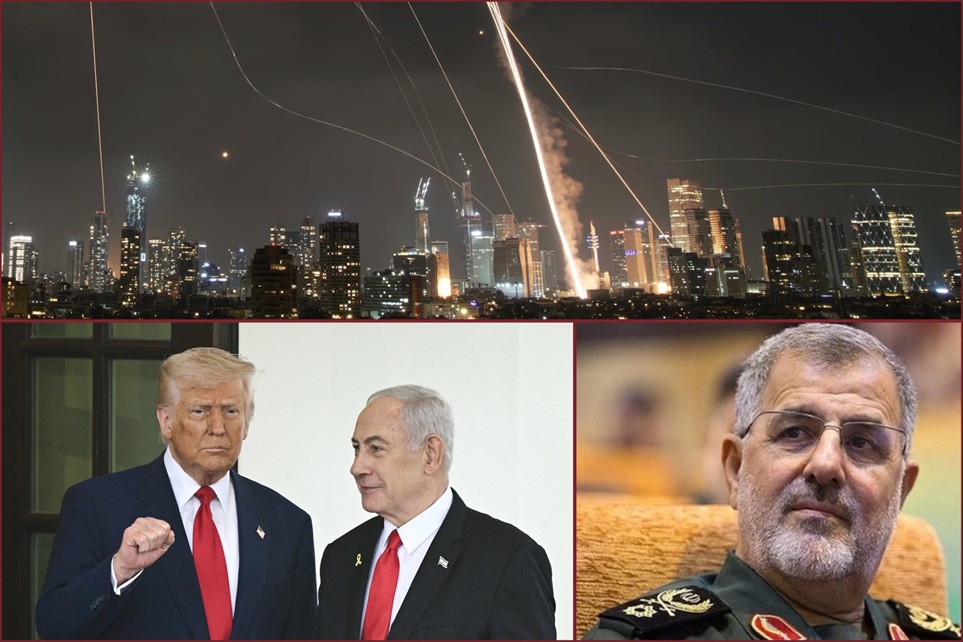
It has been more than a week that on 13 June Iran suffered an unprovoked aggression. This has claimed the lives of military and political leaders of the county, along with nuclear scientists. This attack came while it had been around two months that the U. S. and Iran were conducting indirect talks with the mediation of Oman and Italy, to find a sufficient solution to the concerns about its nuclear program. And the talks seemed developing positively, as it was supposed to hold a new meeting on 16 June with Iran presenting its proposal. And about that American President Trump was also showing positive signs saying that a good deal is about to be reached, and that he warned Israel not to get involved.
After the first shocking strike at dawn 13 June Iran showed surprising integrity despite the losses and soon enough responded with destructive force.
The war has escalated to mutual strikes and reached an equilibrium, as both sides suffer losses, but Iran slowly gaining ground. Both militarily, both politically at the home front and internationally. The question is, what Tel Aviv is clearly expressing, whether Washington gets directly involved, or not. Netanyahu surely wants this, as he has not other victors plan. But the whole region is against it, and the international and even American public opinion is clearly and loudly against direct American involvement. And thus, for a moment, after a week diplomacy seems to gain ground once again. The question is, will it prevail? And if not what can this cause?
What happened on 13 June? How this all started?
The events almost instantly gained an interpretation for the global audience, but as we will see, much was hidden from about the details. As it was claimed, the initial Israeli strike killed 20 Iranian military and political leaders, including several nuclear scientists. This included Iranian Army Chief of Staff Moḥammad Bāqerī, Commander of the Iranian Revolutionary Guards Ḥosseyn Salāmī, Commander of the Iranian Revolutionary Guards Cosmological and Air Forces Commander Amīr-‘Alī Ḥāğīzāde, Commander of the Iranian Army’s Central Hātem-e l-Anbiyā Base Ġolām-‘Alī Rašīd, senior nuclear negotiator and Chief State Advisor ‘Alī Šamhānī – though later it was proven that he survived the attack -, and a number of other prominent Iranian officials. Along with these news it was reported that the a major explosion also hit the Iranian nuclear facility at Naṭanz, though it was dubious what really happened, Iranian authorities soon reported that a major event did happen, but there was no contamination to the outside. Which raised doubts whether it was an aerial strike, or a sabotage operation within the facility.
Soon following this it was reported by various sources that several strikes hit the capital Teheran along with less intense strikes at other major cities. With this it seemed that with one crippling strike the whole command of the Iranian Armed Forces was decapitated, Iran lost most of its nuclear scientists, its nuclear sites were paralyzed, totally lost its air defense capabilities, and thus left practically defenseless. Soon all its remaining armed capabilities and nuclear sites would be crippled, raising fears of a likely political collapse and “regime change”. A scenario much resembling the Syrian events.
The initial Iranian response seemed slow and far from convincing. Tehran launched a wave of drones, which were all thwarted, in large part by the Jordanian air forces. The Iranian Supreme Leader appointed new leaders to the key leading army positions, and major political figures vowed harsh response, but at that time it seemed hollow. The empty threats of a rapidly collapse state apparatus.
And at 13 June afternoon the second wave of Israeli strikes started, mostly concentrating on Tehran and other major cities, and a number of military – mostly air defense radar – position to clear the path for total areal control. Which seemed realistic, and convincing, as Iran famously has a very aging warplane fleet, mostly American planes from before the 1979 revolution, and some later acquired MIG-29s. Meaning a very outdated arsenal against the most developed assets the American technology can provide and in large number. It seemed that such technological disparity cannot be balanced by the Iranian home developed Bāvar-373 air defense system, which was never really tested in real combat.
And this is when surprises started to happen. Though this is still denied – though not too vehemently – by the Israeli command, it was reported that Iran managed to shoot down 2 Israeli F-35 fifth generation stealth warplanes, the most elite assets of the Israeli forces. A plane that Washington only sold to a very few of its most trusted allies, and never one was ever shut down. This seemed unbelievable, but still cannot be independently confirmed, but several factors show that it might just hold water. Fist of all a contested, but not entirely refuted video.
Secondly a relatively detailed article by Iranian PressTv. This suggested that the Iranian defenses intentionally lured the Israeli planes deep within the Iranian airspace to surely hit them, and also to recover the pilots and the wreckage, which would hold immense technological data. Not only for Iran, but also to its allies – like China -, which could be a political leverage secure support. This was partially achieved by the lack of initial response by the air defense, and by a series of sophisticated false radar stations, making the Israelis believe that they should have no difficulty anymore. And indeed, for about two days the Israeli attacks reverted to drone strikes. Which would indicate that some major shock did indeed hit the Israeli command making it think twice how to proceed. And since than Iranian claims stated shooting down at least 3 other F-35s and at least one F-15 warplane. By one Iranian source close to the Iranian state provided a more detailed version, by which one F-35 was shut down in Īlām in Southwest Iran, where one of the pilots was captured – this was heavily publicized by the Iranian media -, while two others were shut down crashing in Azerbaijan. And it is true that seemingly out of the blue, on 14 June Azeri Foreign Minister Bayramov called Tehran to state that Azerbaijan will not allow its airspace to be used against Iran. These details again cannot be independently, or irrefutably proven, but it is an indication that since than no Israeli airplanes were reported in Iranian airspace.
About what really took place at dawn 13 June, the picture was largely altered by later revelations. Iranian researcher – known to be very close to the Iranian state – Amīr Mūsavī talking to Iraqi Diğla TV indicated that the attack was a series of assassinations ranging to 400 people, including Supreme Leader Ayatollah as-Sayyid ‘Alī Hāmeneī. The aim was a swift and total regime change involving internal actors even. And this scenario was very much felt and feared on the first two days of the war.
The later claims that only the Americans did not allow the assassination of Ayatollah Hāmeneī seems highly dishonest, as it raises the question why in the middle of the negotiations Washington would allow the assassination of major Iranian state officials, including the chief nuclear negotiator and the the Foreign Minister, but would at the same time refrain from attacking the head of state. It much rather seems likely that the Iranian claim about a much bigger attack is true, only failed and to cover this fact the claim was made that Ayatollah Hāmeneī was just “spared”. The revelations after the attack and the systematic investigations eventually uncovered major workshops within Iran, where drones and explosives were produced to cause strikes and confusion, and create the appearance that the Israeli air forces were striking everywhere. Such “workshops” were found in Tehran, but also in other cities. Also several major espionage networks were uncovered, and during these operations one of the most sophisticated tools was also found. A highly developed tape marker, which was to be put on high value targets to be hit by drones, or by missiles.
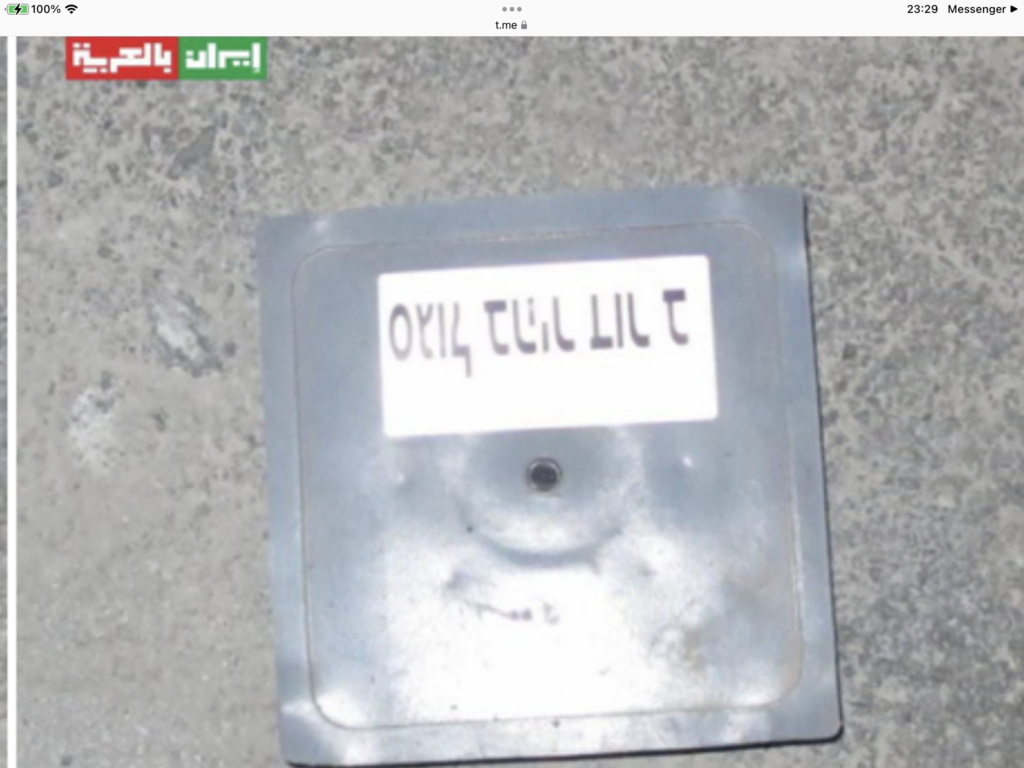
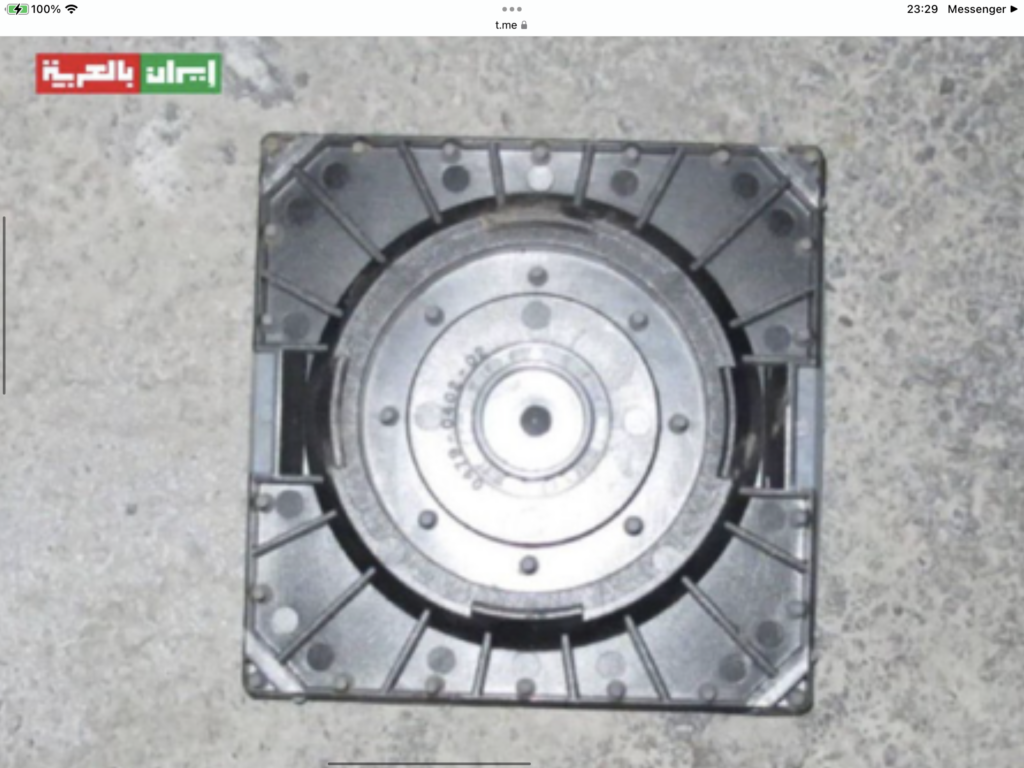
With such revelations the Iranian state by the end of the first day started to gain momentum. Regained control over the internal confusion. The lost military leaders’ positions were filled, Ayatollah Hāneneī appeared in the media and talked to the nation, proving that he is alive and thus Iranian Operation “True Prime 3” was launched. By 20 June it has reached its 17th wave gradually using more and more sophisticated missiles, already hitting key Israeli military bases and key installations.
At this point we shall refrain from diving deep into the military details, as both sides have claims, but due to the extend psychological warfare and the militarily very understandable tight control over all data about the hit sites, it is extremely difficult to clear the precise details of what was hit on each sides, and by what kind of weaponry. But also because the geopolitical dimensions are even more important.
Who was really betrayed?
What is known for sure is that Iran was hit in the middle of a negotiation process between Washington and Tehran, mostly through Omani mediation. That is a clear betrayal. Which leaves the question open about the involvement of the American military in the strike, and the nature of this political move. About this Trump first said Washington was not involved in any way, but Senator Ted Cruise said it was. But than again later on Trump said that he lured Iran into a trap creating a false state of security, only to come back once again and deny this position. Now, Trump is known by rapidly and erratically changing positions, claiming it to be a bargaining strategy, and so it is very difficult to know what he believes is true. Hard to know what is his “real” position. But even taking this into consideration, in the first two days of the war he was contradicting himself that was extreme even by his standards. Which added to his position right before the strike rather points to the supposition that even he was betrayed, not having full control over the entire state military-intelligence apparatus. And that supposition had been raised even before this war by some of his closest supporters.
What is clear that such a massive amount of targets were hit in Iran and such sophisticated practices were used with a high number on agents involved that this operation could not have been designed in days. Some of its aspects must had been in the development for years, and due to the close partnership between the American and the Israeli services, it is practically impossible Washington wouldn’t have known about it. Even more, some of the aspects clearly needed American involvement. Leaving the question, why did Trump even engage in the indirect negotiations?
That is a much bigger question than it seems. Not only because of the American President’s credibility, he is very unpredictable, but because of the mediators involved. The key mediator in these talks was the Sultanate of Oman, which has excellent ties with both the Americans and the Iranians, but also has an unquestionable reputation in the whole region as honest and constructive peace brokers. This series of events put the integrity of Oman into very serious doubt, especially in the eyes of Tehran, but for the whole region. That largely explains why the Sultanate allowed voices praising Iran for its retaliation against Tel Aviv, and why it rapidly stated that it would not participate in any way in any war against Iran with the U. S.
The problem with all this that it is very difficult to de-escalate the situation, a rapidly expanding war, when the highest American decision maker is without credibility, the thus far most effective mediation was shamed not willing to burn itself again, and not other party will like to fill the void, not to suffer the similar fate. In this way it is not only difficult to hammer out a ceasefire and a nuclear deal, but also it is unlikely to stick. Because it was Trump, who walked out from the 2015 JCPOA, and he approved betraying the Iranians with this strike. And this setup despite all efforts and common sense, might just push Tehran to alternative solutions.
Is Iran strong enough for a war?
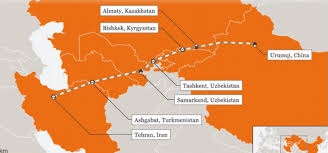
One of these options for Iran is to brace for a long grinding war. But the question is, is it strong enough for it? Given the signs so far, the answer seems yes, despite the obvious unbalance of military power. The huge missile stockpiles and the precision of its strikes are surely signs of power. Which means that the Iranian threat to strike every Americans military position in the region, especially in the Gulf – much closer to Iran than Israel, with way less air protection – very possible. The alleged claims of downing F-35s is also a worrying sign for Washington that the Iranian air defenses might not be that weak. Especially that there are already claims of Russian military support, and signs that China is already providing support. On 15 June China sent two massive carrier planes to Tehran, and since 16 June two Chinese army reconnaissance ships arrived in Iran to provide assistance, likely bracing for an American involvement. It should also be added that at the end of May the first foreign train reached Iran from China, which could prove a stabile supply line in a longer war. But Beijing went even much further.
Pakistan already on the second day of the war announced fully standing by Iran, and the next day the Pakistani Senate authorized the use of force in case of an open war. By various claims Pakistan even threatened to respond with a nuclear strike in case Tel Aviv used nuclear bombs against Iran. Now it is true that Pakistan has much to worry in case the Iranian state collapsed and chaos took over, but also from Tel Aviv itself. Israeli politicians are already talking about Pakistan being the next target. But beyond all that, given the very close partnership between Pakistan and China, it is impossible not miss than Beijing fosters this remarkable firm and strong Pakistani position. And that adds up that in case of a long direct war, Iran at the very minimum can count on support and supplies from China.
Iran also has two massive economic winning cards. It can close the Strait of Hormuz, crippling world energy supplies. This could hit Europe particularly hard, which is already suffering from extreme prices and the loss of Russian supplies. But even if it failed, as a second card in a desperate position Tehran could strike at the oil and gas fields of the Gulf, ensuring this crippling effect.
On the other hand Iran knows perfectly well that Tel Aviv cannot hold on for much longer economically, and even socially, as a massive wave of people started to leave the country at any cost.
Now, Washington could step in directly, which was clearly the winning strategy of Netanyahu. “Mister President, finish the job!”, as his slogan says. But in a very surprising turn, overall Western, and even American public and political opinions are turning against this track. Congress members petitioning to adopt a resolution prohibiting Trump to got to war with Iran. The same process exists in the U.K. Overall the American public opinion is against this war, saying that this is not America’s war and it should not be dragged into it by Netanyahu. That is not only because of the outrage by the Israeli behavior in Gaza, Lebanon and Syria, but also because the American society at large is tired of wars. Trump was elected to end them and repair the internal problems. In this context the prospect of a massive, costly and enduring war is outrageous. A war only winnable with invasion, if ever, and invasion victory would take much much longer than Iraq did. And even against Iraq Washington enjoyed the support of a broad coalition, the support of the Gulf states, and Iraq had no allies. All these factors are reversed now. Tehran knows that and that is why it is not stepping back.
Is this is a nuclear issue?
The paper thin claim of Tel Aviv for the attack was that Iran was allegedly developing a nuclear bomb. Though from the geopolitical patterns, and even by Israeli rhetorics wanting a regime change, it is clear this matter is not a nuclear issue. Nonetheless the question should be answered, as it is serious and it is ruling the decisions.
The International Atomic Energy Agency (IAEA) with all its inspections found no proof of ever such Iranian program ever existing. On 18 June IAEA Director Rafael Grossi clearly admitted this in an interview. In March 2025 U.S. Intelligence Director Tulsi Gabbard in a Senate hearing clearly stated that Iran has no nuclear weapons program, nor Supreme Leader Hāmeneī authorized such a plan. It is also very noticeable that after the first strike against Naṭanz the subsequent Israeli strikes concentrated on military and civilian targets, not the nuclear sites. Which makes the whole claim very dishonest.
Not to mentioned that Iranian authorities have time and again denied such a program ever existing. And it is very illogical to state that Iran ever had such a program, yet singed the JCPOA with very tight institutions by the IAEA.
Only two things suggest such program. The claims of Netanyahu for 30 years with the same exact constant that Iran is only weeks away from a nuclear arsenal, and the “belief” of Trump in that.
Iran so far very logically did not need, nor seek nuclear weapons. It knows well the international criticism it would bring. It wants electricity and nuclear technology. Nuclear electricity and technology is a power itself and Iran is already a massive energy exporter to the region. But also Iran does not need such weapons. It has no serious military threats in the region apart from Tel Aviv, and eventually the U.S. Even its formerly troubled ties with the Gulf states are rapidly improving in recent years. And even against the Israeli threat, with its precision missiles it can already hit Israeli nuclear sites at any time, with the same effect as a nuclear bomb. And as for the United States, it has no means to deliver such weapons to American soil, even if had one.
The attack and the matter, however, has a very unwanted and counterproductive side effect. Since the attack the Iranian public opinion by recent polls shifted dramatically from clearly rejecting the idea of possessing nuclear weapons to mostly wanting a nuclear bomb now an ultimate safety guarantee. With this the Iran government ever contemplating the idea, would not have to fight an uphill battle, but to contrary, it will have to convince the people why not to have it.
The other major problem is that just before the war starting the IEAE had a very dubious and highly questionable report criticizing Iran for the lack of compliance, which is very doubtful. But this happened around the same time Iranian intelligence obtaining a massive amount secret Israeli data, some revealing a collusion between the Israeli government and the IEAE decision making, especially suggesting close links to Director Grossi. In this light Iran might consider cutting all ties with the IEAE and than the doors would really open for a potential Iranian nuclear weapon.
The possible scenarios
The most probable Israeli plan was a swift strike following the Lebanese and Syrian scripts and to impose a new government with would either be friendly to Washington and Tel Aviv, or would collapse causing a civil war. That is shown by the project’s name, Operation Rising Lion, which is an indication to the old Iranian flag showing a lion with a rising sun. This flag was the official under the monarchy, meaning a clear hint to a monarchical restoration with the former Crown Prince, Reẓā Pahlavī on the throne. He lived most of his life in the U.S., but in recent years he has become a regular guest in Tel Aviv.
That plan collapsed, as despite the sporadic protests of recents years, there is massive solidarity now in the Iranian society. The support for the government and the whole state establishment is in long not seen heights, as even the opposition abroad support the government.
Plan B was to drag Washington into the war, to which an Iranian strike would have been the perfect reason. But Tehran acts way more prudent than to provide such pretext, tough a possible false flag operation might not be excluded. Also the public opinion is harshly against the war and criticizing the Netanyahu government for its actions from Gaza on. In that case a massive bombardment against the Iranian main nuclear sights could be a possible next step. But even that has serious consequences. The possible nuclear blast and contamination would not only be a humanitarian catastrophe in Iran, but to the whole region hitting all Gulf states and jeopardizing the energy supplies from the Gulf. Even if the strikes can penetrate the well fortified Iranian sites deep under the mountains.
These factors together explain why Trump at the last second, at least as it seems for the moment, stepped back from the “total surrender” position giving ground to diplomacy once again. He gave a two weeks ultimatum to reach a deal, which is quite impossible, as technical details cannot be reached in such a short term, but also because Iran rejects to negotiate under pressure. And thus there is a very thin window for diplomacy. Even though, a peaceful solution is what all parties apart from Netanyahu wants, and that is the only path not threatening with a global war, considering Russia and China already took very clear position on the side of Iran.
Yet for the region and Iran internally, the consequences huge. If Iran remains unbroken at the end of this conflict, the regional attitude will change making Iran as a hero and an ultimate power. This would probably end the “normalization process”, if not even largely rolling it back. Tensions would once again turn massively against Tel Aviv, isolating it.
As for Iran internationally, this massive support the government has now, and by symbolizing state unity possibly like never before, Ayatollah Hāmeneī could appoint his successor and hand over power to him, leaving office as a hero. With that, a new Supreme Leader with fresh ambitions and alternatives against the Western sanction could launch a fresh start. The Iranian society that was assessed internally vulnerable, would be in the zenith of its cohesion.
So the stakes as extremely high for both Tel Aviv and Tehran, but the latter has a lower bar of demands, and a bigger power base to carry on a long war. Which might just allow a diplomatic solution prevail against madness.