
Though since the night of 4 October there seems to be indications that the almost two years long against Gaza is about to end the true prospects of Middle Eastern peace are in fact very far. And getting farther with the developments each day. Trump might celebrate his achievement enforcing a settlement of both the waring sides in Palestine, there is real doubt how much this “deal”, or settlement would actually work and even more how much it would stick. Since by all indications the tangible details are now being hammered out in Egypt, while the Israeli captives must be released immediately. If that happens, Netanyahu will have little incentive to stop the war that is highly demanded by his government allies. Yet if it does not happen, it will only serve as yet another excuse for him to double down with the war using the pretext that the “last chance” of peace was refused.
But regardless of whether this war front would close or not, war is still in the horizon on other fronts. Ever since the American-Israeli attack against Iran ended it June, there were clear indications that this is just a temporary pause until Tel Aviv recuperates. And as soon the excuse is found the war will start again. Which was a created by the activation of the so called “Snap Back” mechanism, the last reminder of the 2015 JCPOA nuclear settlement, which was never really functioning anyways.
During the last week or so, social media platforms are filled with assessments that the new war against Iran is imminent and unavoidable. Which sentiment was shared by the Iranian, or pro-Iranian platforms as well. And this is not just political rhetoric, as Tehran is rapidly improving its military capabilities by purchasing new – so far only Russian – warplanes, air defenses, upgrading its missile arsenal and closing problematic fronts. Whatever is perceived as the best step on the other side, it is clear that Tehran is calculating with a war and that determines the mindset. And seeing all there Western steps this mindset is understandable.
The incentives of war
Why the war is imminent and seems unavoidable? This is simply by the results of the war on Gaza and the regional and global developments it created. While the the Tel Aviv regime waged a war in several fronts consecutively in the last two years the immense expenses and social-economic toll brought little result. Gaza has been demolished, but the almost two million Palestinians are not expelled, and the prospects of Trump’s plan suggest that they won’t be. Meaning the main goal of the most extreme elements of Netanyahu’s coalition will not be fulfilled.
In Lebanon Ḥizb Allah was somewhat weakened last year, but not broken and despite all attempts to disarm it this will probably not happen. Not without pushing the country into a civil war with very dubious outcomes for the West.
Yemen was bombed several times viciously, yet the government in Sana’a is not broken and keeps targeting the Israeli positions with growing success. And even Washington seems helpless to change this equation.
Iran was attacked and the Israeli affiliated outlets are boosting the image of success, but it is well known that Tel Aviv suffered a crushing setback by the Iranian response. Iran is not any less strong now than it was six months ago and has the power to change the regional equation.
And all the while the overall image of Tel Aviv around the world is irreversibly shattered. The image of a wronged people wishing for a safe country for their own is overtaken by the image of a rouge state that is carrying out a genocide in Gaza, attacking every country in the region and dragging the West into these highly unpopular wars, which it could not conduct alone.
The only “success” of this war campaign was the expanded colonization of the West Bank and the collapse of Syria. Yet just because Syria collapsed, it does not mean that this front was stabilized. The current Syrian regime might be an ally of Tel Aviv, but its future is very dubious, as it struggles to achieve any stability. And it is a telling indication that despite the political alliance and the clear will, the current rulers of Damascus cannot push forward with the “security deal” with Tel Aviv.
The only thing that hold Netanyahu’s coalition together is the war, as it is an excuse to postpone any elections or accountability for the events of the last two to three years. And the Tel Aviv regime was struggling from one early elections to the other even before the war, barely able to patch any government together. There it is a vital need for Netanyahu to continue the war in any shape and form possible. Not just to hold on to power, but also to convince the colonist population that there is a future and the war of the last two years would never recur. Which is absolutely necessary, as the levels of those leaving the colonies are growing.
The excuse: Snap Back
It should be remembered that the war in June was preluded by the tension of Iran’s alleged nuclear weapons program and the negotiations around it, while the report of the International Atomic Energy Agency – IAEA – provided the excuse to put Tehran in the light that it was not cooperating sufficiently. And even though during the war IAEA Director Grossi admitted that there was no proof for any Iranian nuclear weapons program, the previous dubious report was used as an excuse for the global media for the war. And even though Trump boasted many times that Iran’s nuclear capabilities are obliterated, there was still the question of quantities of enriched uranium.
The IAEA with massive Western political backing after the war pushed for inspections on the ground to see the state of the damaged installations and to inspect the enrichment uranium stockpiles. Which given the shaken trust in the organization, Tehran was not willing to agree to. And here came in the case of the so called Snap Back mechanism, a very complex matter.
In short, when the JCPOA was signed in 2015, both Iran and the Western parties mutually distrusted each other and therefore it was agreed as a trust mechanism that while most sanctions are to be lifted against Iran, in case the Iranian cooperation is found to be insufficient, these sanctions would “snap back” immediately. However, there was a time limit to it for ten years, after which the UN sanctions would be permanently lifted and the “Snap Back” option terminated. That deadline was set to October this year.
Trump famously withdrew from the agreement during his first term and reimposed all American sanctions, but could not do the same with the UN ones. The European signatories of the deal though technically still part of it did little to effectively lift, or circumvent the American sanctions and thus Iran saw little benefit from the deal, constantly pushing – within the stipulations of the JCPOA – the level of uranium enrichment. In a way to pressure the Europeans to abide by their part of the deal.
On 28 August the so called European Troika – the UK, France and Germany – announced that since Iran is not cooperating with the IAEA, they will activate the Snap Back, before it would end, starting a 30 days interim period before the reintroduction of the sanctions. Though Tehran stated that the measure is illegal, it knew it can do little to avoid it.
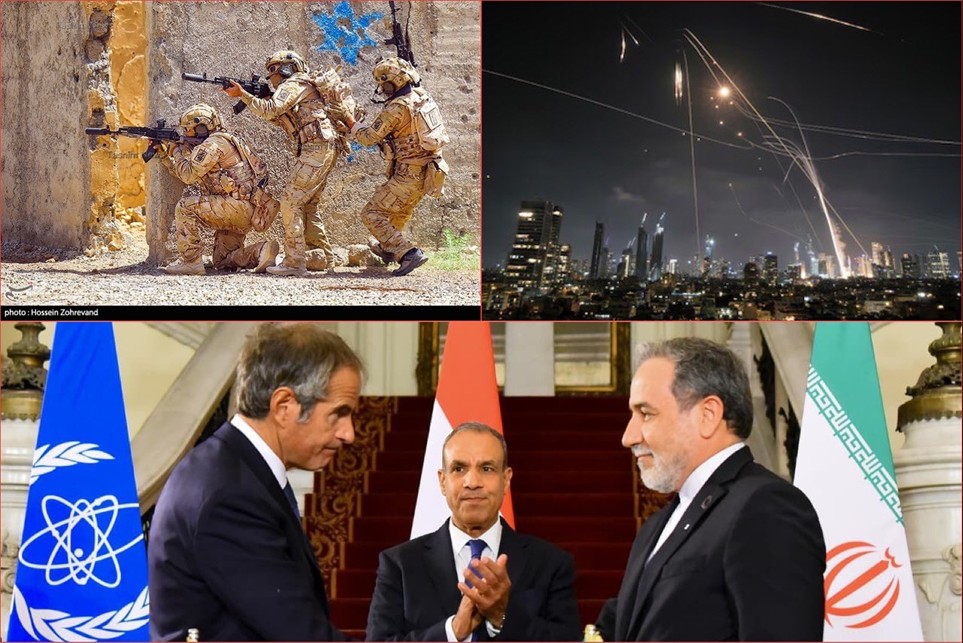
In a last attempt a new deal was signed in Cairo between Iran and the IAEA about the new ways of cooperation. This would allow the IAEA to conduct inspections in Iran and gain access to the facilities, but with increased security measures to prevent the leak of sensitive informations. However, Iran also included in the deal that any aggressive step against Iran, war, or the Snap Back operation would immediately terminate this deal. The ball suddenly was on the European side to cancel the Snap Back mechanism, as Iran was willing to cooperate.
Unsurprisingly the European did not terminate the mechanism, and it is very telling that State Secretary Rubio announced the reimposition of the sanctions against Iran. Though the US was not even part of the deal anymore with not legal saying in the matter.
These sanctions will very severely impact the Iranian economy in the short term, but in the long run Tehran will be able to overcome these with growing Chinese cooperation. Especially since Russia and China- along with some other states – stated that they will not abide by these regulations. So the impact harsh now will not be as severe, but can crate the global image that Iran is on the wrong. Producing the excuse for the war, like the IEAE report in June.
Preparations
One follows the Iranian social media sites, or those close to the Iranian state can clearly see that Iran is gearing up for the war. And these developments though highly downplayed by Western analysts, they reached the level that something had to be said about them.
The biggest shortcoming of the Iranian military for decades now is that it practically has no air power. It has a modest number of old American warplanes from before the 1979 Revolution, but these are of an obsolete technology with no spare parts for decades. It is a smaller miracle that they are still flying, and their only real benefit was that kept the Iranian pilots well trained. It is not a coincidence that the otherwise well equipped Revolutionary Guard Corps has practically no air force much more focusing on drone technology, or that during the 12 days war in June Iran did not even attempt to use the planes it has, knowing full well that they would be lost almost instantly. Which would make them lose the pilots, which are now more important than the old planes.
It was believed that air defense systems provide enough cover to protect the Iranian airspace, while drones and missiles are enough deterrent to persuade any enemy not to test Tehran’s resolve. The 12 days war proved this doctrine was only partially correct, partially failed. It was shown that Iran can very accurately hit back and devastate its enemies far beyond the expectations, but its skies are much less defended than needed. And thus an at least adequate air power must be created. This planning is not new, but Tehran believed before June that there is still time.
Tehran agreed even before 2025 to buy SU-35 planes from Russia, and even the rights to produce them, but limitations of the Russian manufacturing capabilities because of the war in Ukraine caused significant delays, and eventually left Iran vulnerable in June. Now efforts to fill this gap were accelerated. Greatly.
On 23 September the Iranian state media confirmed that modernized MIG-29s have been procured and put into service in Iran. That is a step forward, but rightly criticized as far from being sufficient. The number of these planes are not known, but even if there is a significant number of them and there are pilots to fly them, the MIG-29 is a technology of the ‘80s. Though it might have been modernized, it is simply not match to what the Americans and the Israelis are using. At best, it could play a supporting role, not a deterrent.
Yet recent reports by unofficial, but reliable sources close to Tehran talk about SU-35 warplanes soon arriving to Iran. And since this is widely talked about now, it is likely that some of them have already arrived. And the SU-35 is a much more developed and potent warplane. However, that is not the end of the program, as Iran has already ordered Chinese J-10 planes, and even more modern variant, which looking at the Chinese political position, might soon also arrive. Though so far nothing has been confirmed about that. But in September the Iranian military budget was greatly expanded, so it is a fair assumption that Tehran can soon put a larger number of fairly modern and tested Russian and Chinese planes into service.
Iran is also buying Chinese air defense batteries and reports are growing that some of these assets are arriving. Tehran also boosted its missiles capabilities significantly. Not only hinting new series of missiles introduced, while those used in June were very convincing, but also preparing to launch new satellites from its own space station in Čābahār. Signaling missile and reconnaissance power at the same time.
Another significant development that Iran managed to reach an understanding with Pakistan to increase border security and crack down of the Baluch separatists groups. This problem has been hemorrhaging the Iranian state security for decades, but recently something has changed. While in August and early September there were multiple reports of intense operations in Eastern Iran, since than insurgents subsided and there are similar operations now in Pakistan.
The regional mindset and possible scenarios
The question is how will the regional states react to yet another war against Iran. It might be assumed that all parties want to avoid another escalation and intervene to prevent it. But there is little doubt about this.
The Gulf states hardly reacted to the Israeli bombardment against Qatar, nor did anything substantial to prevent the massacres in Gaza. The political steps by the European and Latin American states were bigger than those of the Arab League to save Palestine, or to prevent the aggression against Qatar from recurring. So there can be little doubt that the Gulf states would allow the US to use their bases and airspace for a war.
Türkiye, an active ally of Tel Aviv in the destruction of Syria would also support such a war to undercut its regional rival, and to further expand its presence in Syria and Iraq. It is very telling that Ankara despite all its rhetoric has already implemented sanctions against Iran.
Iran knows full well that despite all attempts for reconciliation with the Gulf states and a viable coexistence with Türkiye and Azerbaijan in an upcoming war – just like in June – these states will allow the war, likely even help it. That does not mean Tehran will consider them part of the war, but will not respect their reservations when it needs to hit back on American bases. So the war will be even less limited.
The impact of this development is much more on the long run, if Iran avoids the war, or gets out of it relatively well. Because this way the era of active reconciliation will end. The policy of respectful diplomacy will remain, but Tehran will give up to persuade these states for constructive coexistence. The real shift is that for long Iranian political circles while seeing prospects of Russian and Chinese cooperation has serious reservations not to overly rely on them. These reservations are no abandoned giving serious concessions to Beijing. And thus Iran is pushed into the arms of China. Which will likely exploit this opportunity to gain a stabile foothold in the Persian Gulf.
War now, or very soon
Despite all these calculations there might just be reasons why the war despite being very likely might just be postponed for a little further. And there are three possible reasons for that suggesting alternative war plans.
First of all the atmosphere is not right. Iran obviously expects a war soon to start and rapidly gearing up to it. Which takes away the element of surprise. Yet it is crucial, as success of the American-Israeli aggression in June was that they managed to surprise the Iranians by the series of assassinations and sudden strikes on key installations. From which they expected the Iranian state not being able to recover and would collapse. Which did not happen. And the time that has pasted since then gave sufficient opportunity to Tehran to fill the gaps in its defenses. So there might be reasons to wait for some time hoping for Iranian readiness to decrease.
It is clear that the overall Western political system has high hopes for the social impact of the reinstated sanctions against Iran. Increasing economic hardship might cause enough unrest in Iran to create a political division, which would bring about enough internal distraction to be exploited by a sudden war. It is true that Iran’s overall prospects economically are much better than ten years ago, as China and Russia – along with a group of other states – clearly declared that they will disregard the UN sanctions. Thus in time the realigned economic channels and growing investments might prove enough to totally circumvent the sanctions. But the short round the impact of these sanctions will surely be felt in Iran.
Lastly, there are upcoming developments Washington – and those on its side in the region – might be banking on to create a better footing for a war. In November there will be elections in Iraq, which is very significant for Iran. Because if the elections will bring in an Iraqi government opposing Iran – a very unlikely scenario – there will be more footing for an attack, just like a possible political turmoil in Iraq that might blow up the country, like in 2014. Which would force Iran to be involved, and thus busy. There are still hopes in the Tel Aviv and Washington that in Lebanon the disarmament of Ḥizb Allah might also happen, or push the country into internal war, which would also force Iran to engage in a front where its will be weak.
These developments are on the scale to guarantee a better position for a war against Iran, as Iraqi elections might go smoothly and Lebanon might as well remain relatively stable, but could be temping enough for an argument to wait. If only a little. But the overall setup is that Tel Aviv is in very deep crisis and from its point of view this is the right time to fulfill all regional ambitions. A chance that is not likely to return.