Despite the mainstream leaning towards the Western narratives downplayed the recent 12 days war between Iran and Tel Aviv as if Tehran suffered a major defeat the reality is quite different. Tel Aviv dedicated the bulk of its military capabilities to the war, called in all regional favors and relied heavily on the eventual involvement of the American forces, which all worked, and used all its intelligence assets it embedded in Iran for years with a clear plan of “regime change”, Iran not only survived the rapid attack and the shock of losing many of its top generals, but hit back to Tel Aviv hard. Harder than anyone calculated. And even though Trump eventually used its strategic bombers to hit the main Iranian nuclear site at Fordō, it was very clear from Trump’s behavior that he does his best not to get dragged into a long war. He wanted to save face and seem decisive with a ceremonial strike, but being well aware of the resentment of the American public towards continuous Middle Easter war, he did not want a real war. It might seem a relatively mind achievement, the very fact that the Iranian leadership could survive a concentrated and well planned attack and save face with hitting back hard, did indeed achieve a strategic victory. Especially, if we count in that since then the support by China and Pakistan, and to some extent by Russia increased very noticeably.
However, since the war reached an unofficial ceasefire in June, both the Iranian political and the military leadership did not hide the opinion that all that is just temporarily. That they don’t trust the American indications and that Tel Aviv would have given up on the regime change plan and soon the war could flare up again. Harsh and bold statements, however, being part of the Iranian politics is just one thing.
Two recent decisions in the upper echelons of the Iranian political and military establishment indicate that something big formulating in Iran. And looking at the regional chessboard it is very understandable that many in the Iranian leadership, and not just the hardliners, might consider this a very temping time for major action.
Two key decisions
On Sunday 3 August it was announced that Iranian President Mas‘ūd Pezeškiyān issued a presidential decree to form the National Defense Council being chaired by himself, and the Supreme National Security Council approved it. But what is this council?
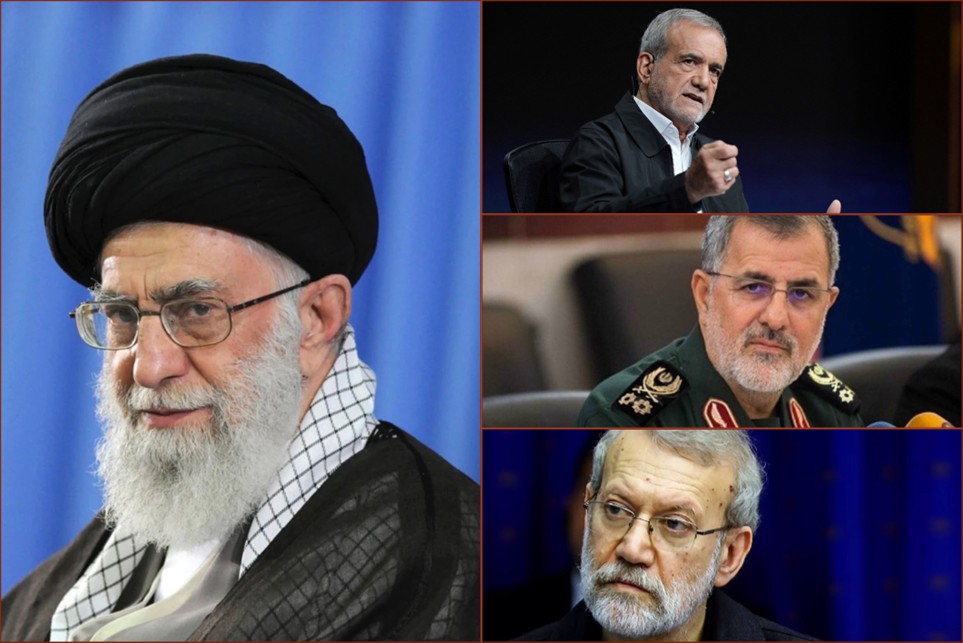
The National Defense Council is led by the President himself and involves top political and military leaders, in the latter case both from the army and the Islamic Revolutionary Guards Corps (Pāsdārān). Though it should be pointed out that the names of the members are not officially published, it is fairly supposed that members of the government, representatives of Supreme Leader as-Sayyid ‘Alī Hāmeneī, the judiciary and the armed corps are involved and the official objective of the council is to enhance coordination between the various sectors of the decision making in case of war. Which is a fairly broad portfolio with no specific objectives given. Also raising the question why was it needed, if the Pāsdārān was fully in control of the situation and the official Iranian version about the 12 days war is to believed, as Iran came out totally victorious.
There are many speculations about this council, with good reason, as no similar organization existed since the end of the war with Iraq. Some suggest that it this is something totally new, while others regard it to be the reinstitution of the former Defense Council that existed until 1989. The reality is somewhere in the middle that while this is not a totally unprecedented institution, in its current form it is something we haven’t seen in Iranian politics so far. During the war with Iraq the National Defense Council was the centralized decision making body to coordinate all military, economic and political decision connected to the war with the aim of squeezing out the most of the available resources and achieving a victory.
Yet when the war ended and it was clear that the political establishment had to restructure itself for a peacetime management and focusing on rebuilding the country, so there was no need anymore for such a concentrated body. And thus the Supreme National Security Council (SNSC) was formed from the National Defense Council. The SNSC became the supreme strategic policy forming organization that formulated the key aspects of foreign policy and handled all matters concerning internal security. Yet since the priorities of the wartime era have all changed, its most crucial role became to handle the nuclear negotiations with the West. The SNSC has amongst its members the key representatives of all political and military institutions of the state, its Secretary General is not elected, but chosen, mostly by careful balancing between the main political camps, but ultimately relying on the trust of the Supreme Leader. In many ways, the SNSC and its Secretary General used to act as a counterbalance to the government, in case the elected president went to far, or lacked determination in certain key policies, like supporting allies in the region.
In some cases the SNSC Secretary General was almost unnoticeable advisor, an intermediary between the Supreme Leader and the president, while in other cases under a more charismatic Secretary General of the SNSC acted as a second foreign ministry, an extended arm of as-Sayyid Hāmeneī. Since the overall understanding between the Supreme Leader and the president after Aḥmadīnežād left office in 2013 was fairly good, the SNSC used to play a fairly invisible role for the public. That was the case both under President Rōḥānī, despite the severe disagreements about the nuclear deal, and even more under President Ra’īsī. Yet since President Pezeškiyān came into office, and he is being from the reformist camp, there were clear questions when will the SNSC start to play a more visible role once again. Especially that its Secretary General since 2023 ‘Alī Akbar Aḥmadiyān was a relatively unknown former Pāsdārān commander, far from personal significance of his predecessors.
Under the provisions of the Iranian constitution the SNSC may, in case of need, formulate new subordinate organizations, and its meeting are all presided over by the president. So there could not have been serious objection to the decision of Pezeškiyān to form a more focused body subordinate to the SNSC, right after a war that threatened the whole political system. In this sense it is a new body, similar to the SNSC, but more focused on wartime policies, as if the country was in an active war, but not without precedence and well established political and constitutional legitimacy.
The bigger questions are, why this council is needed, and why the SNSC cannot play the same role? One possible explanation can be that the SNSC simply became entrenched in the political system as a general policy and strategy formulating body with too many members, not anymore used to immediate decision making and a more focused smaller group was needed. Which would indicate that whatever the rhetoric is both in the West and in Iran, the key decision makers in Tehran calculate with yet again direct war in the very soon future and it is gearing up for it. And if that is the case, it is both very logical and prudent that the president would want to have a firm grip on such policy making, while the more hardline elements can find it prudent to involve Pezeškiyān, who represents the reform camp and has a fairly substantial popular support.
The other possible explanation is that major changes are about to happen in the political establishment, with a very likely election of a new Supreme Leader, which amid such volatile regional dynamics and right after a shocking war, needs form grip on the all political institutions. And it also needs a high level of cooperation from the various political camps, which despite the Western narratives picturing Iran as one moonlit dictatorship, do exist.
In one way or another, Iran clearly suspects war. Either in the sense that the current “ceasefire” would not last and the war suddenly erupts again, or that Iran is indeed keen to avoid the war, but seeing the sudden rise of popular and political unity finds it opportune to restructure the upper echelons and appoint new leaders and suspects that at that time of relative vulnerability Tel Aviv and Washington would attack once again.
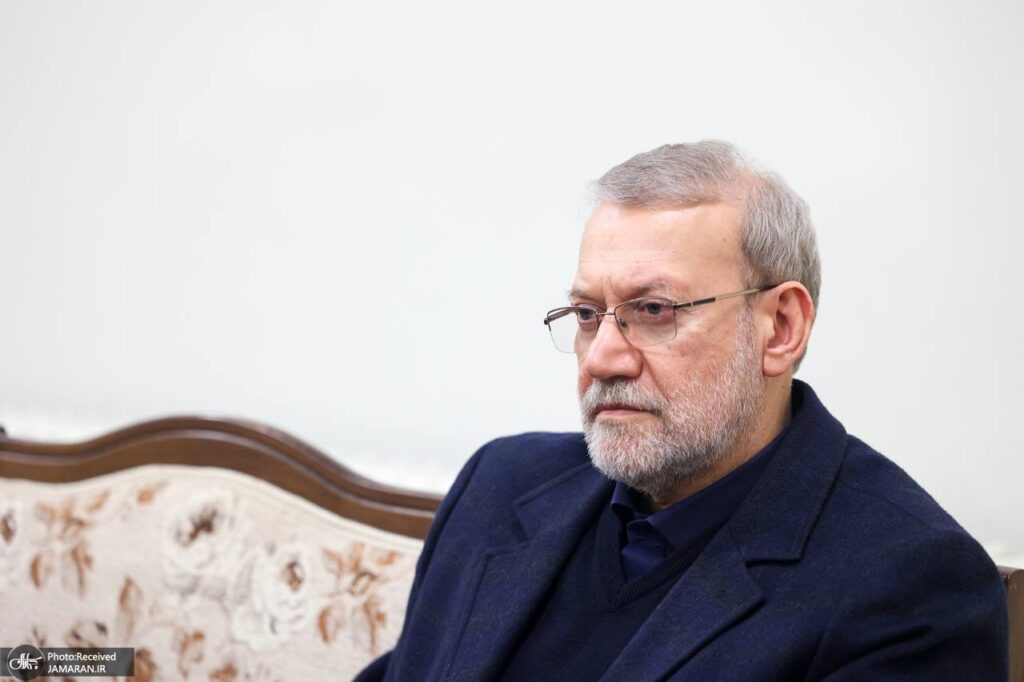
The news of the formulation of the National Defense Council did not even settle, when two days later, on 5 August ‘Alī Lārīğānī was appointed as Secretary General of the SNSC. That again, is not something new. Lārīğānī, again a former Pāsdārān commander, had been the Secretary General of the SNSC before, between 2005 and 2007, though with little over two years, he has been so far the shortest serving leader of the organization. Yet his appointment is very significant, even more than formation of the National Defense Council.
Who is ‘Alī Lārīğānī?
To understand the significance of this development, we should see who Lārīğānī is.
First of all, because the SNSC has never had a former Secretary General reappointed, and so far all such changes were due to major political changes. The SNSC’s first Secretary General Ḥasan Rōḥānī, who later became the president, held office for 16 years, and only left when Aḥmadīnežād came to office, signaling a new era. He was followed by Lārīğānī, but he had too many clashes with Aḥmadīnežād and was found to be to “liberal”, so he was replaced by a member of the hardline camp, Sa‘īd Ğalīlī. He remained in office until 2013, but almost immediately after Aḥmadīnežād’s term was over Ğalīlī was replaced by ‘Alī Šamhānī representing the reform camp. Šamhānī is still regarded as one of the most talented tacticians and a very reliable members of the establishment. Despite not having any noticeable formal office since 2023, though one of the close advisors of the Supreme Leader, he was targeted by the Israeli assassinations during the recent war, and he was one of the few, who miraculously survived the assassination attempt, despite his home being blown up. Yet Šāmhānī was removed in 2023, not long after his former deputy on the Defense Ministry and a close associate ‘Alī Reẓā Akbarī was revealed to be a British spy handing over sensitive nuclear informations, and was executed. The fact that SNSC Secretly General ‘Alī Akbar Aḥmadiyān is now replaced after only roughly two and a half years clearly shows a major political pivot. Though it is very noticeable that both Šamhānī and Aḥmadiyān are appointed to the National Defense Council by the direct endorsement of Supreme Leader Hāmeneī.
The reappointed Secretary ‘Alī Lārīğānī, however, is one of the most prominent politicians of the Iranian establishment. His father Mīrzā Hāšem Lārīğānī was a very prominent religious leader, who spent a significant time of his life in Iraq, in the holy city of an-Nağaf, where all his five sons were born. All of the Lārīğānī brothers had significant political careers, some were also successful in science and business, one brother, Ṣādeq Lārīğānī was even the head of the Judiciary Authority. Also through family connections the brothers have close connections to other leading religious families. Though all the five brothers have had very serious careers and a perfect reputation by their father and being born in of the holy cities of Shiī Islam, ‘Alī Lārīğānī had by far the biggest significance. He served the Pāsdārān during the war with Iraq, hold decrees in mathematics and in philosophy, started his political career as a cultural minister and for ten years he was the head of the Islamic Republic of Iran Broadcasting (IRIB), the main state news outlet. In 2005 he ran for the presidency, but after a poor performance he was compensated by the post of Secretary of the SNSC. Though he left this position after a record short two years, from 2008 to 2020 he was a Speaker of the Parliament for three consecutive terms. He ran for the presidency both in 2021 and 2024, but both times he was disqualified. Which hinted that despite starting his political journey as a pragmatic conservative, his eventual leaning toward the reform camp made him less desirable for higher office. His career was on decline since 2020, but he is still one of the close advisors of the Supreme Leader, who might be conservative, he is still very pragmatic and influential.
He is one those key figures of the Iranian politics, who does not clearly attached to any major camp and would not compromise for endorsing major figures, but has good connections to all camps and a person of compromises. A typical kingmaker, and intermediary with pragmatic views, who while not holding noticeable office for the last five years, he was very much involved in significant political projects. He was the last one to visit Syrian President Baššār al-Asad still in office, only days before his fall in 7 December 2024, and we still know practically nothing about that meeting. It was also him, who in March 2025, so after Trump pushed for renewed nuclear negotiations, but still before the Israeli-American war against Iran stated that an attack against the country would push Tehran to obtain nuclear weapons to defend itself. As one of the closest advisors of the Supreme Leader his words had, and still have so huge significance, yet he could do it, as he is not holding state office, his statements are not officially state policy. And that is a very distinct feature of Iranian politics, when the official state policy is one thing, but key figures may indicate a different approach, only to be disregarded as personal statement in case of heavy criticism. Which happened in this case as well. Nonetheless, it is very significant that such a pragmatic person as Lārīğānī would hint eventually having a nuclear weapon under pressure, just like his appointment now as SNSC Secretary. And his appointment now is clearly not a sign of dissatisfaction with former Secretary Aḥmadiyān, but that a more significant person in needed.
The reinstatement of Lārīğānī as SNSC Secretary General is perfectly in line with the establishment of the National Defense Council. He is trusted by the Supreme Leader, the Pāsdārān and as more moderate person by current president Pezeškiyān as well, pragmatic and educated, very experienced and due to his family background has an immaculate reputation with the clergy. The kind of person who can take pressure and makes hard decisions in time of war, but also the kind of kingmaker, if major personal changes are coming.
Time for a new Supreme Leader?
At the age of 86 and still in overall good health as-Sayyid ‘Alī Hāmeneī may still have many year ahead of him as Supreme Leader, as on other posts some clerics still hold office in their late ‘90s. But certainly at this age it is more than appropriate to formulate a policy for his succession. The problem is that the Supreme Leader with all his powers both politically and religiously is such a sensitive post that a replacement shakes the whole establishment. Which cannot be afforded at a time of imminent crisis, or if there is no popular support.
When Homeīnī died on 1989 the Islamic Republic had no political alternative in Iran and support for it was strong, still the election of Hāmeneī needed careful maneuvering and a kingmaker, like Rafsanğānī. Which worked well. But by the late 2000’s it was time to think about the future.
It was theorized that after all the internal troubles caused by Aḥmadīnežād’s presidency the plans for succession were accelerated, and the cabinet of Ḥasan Rōḥānī was carefully put together from the best elements for the former governments to lay down the foundations for transition. That is why the nuclear deal of 2015 (JCPOA) was tacitly endorsed, as it would be a settlement with the West eliminating the threat of intervention in case of succession crisis, but also lifting the sanctions would boost the economy and consequently the social conditions that an increased popularity could mitigate internal pressure. The new Supreme Leader could start a new era. Yet when Trump pulled out of the JCPOA the whole plan collapsed, as the long awaited social reforms were delayed and dissatisfaction with the establishment grew. That is clearly shown by the dropping participation of all parliamentary and presidential elections since the 2000’s. It was also widely held that after Rōḥānī’s second term Ebrāhīm Ra’īsī was chosen to be the successor, and was only elected to boost his image and after two presidential terms only continue as Supreme Leader. Yet when he died in a plane crash – by now widely held as an Israeli assassination – this alleged plan also ended. Raising the more pressing question how to continue and who to choose as a successor, when public dissatisfaction is growing.
At this critical point the 12 days war has had a huge impact. The war united the different political camps for the defense of the country, while the people once again rallied behind the state, many times foiling assassination and Israeli clandestine operations thanks to the involvement of the population actively helping the state institutions. While quite the contrary was expected in Tel Aviv and Washington, hoping that at least a part of the population would rise up in protests. The role as-Sayyid Hāneneī played in the war was also significant, as he was seen not hiding, fully in cooperation with the military leadership, but also not meddling to much in the sense that at that age he would want to have a say in everything.
This creates a long awaited opportunity to boost popular satisfaction to a level, when the Supreme Leader can be replaced with minimal fear of political meltdown, or that the enemies of Iran would be able to exploit it. And here the fact that there are not even any suggestions who the successor would be should not be a problem. After all Hāmeneī was far from being the most likely candidate in 1989 and it still worked.
Now, right after the war Hāmeneī can confidently say to the people that he did what he could and the war showed that the decisions not to trust the West and to invest heavily in the army were good decisions, but also the war showed that a younger, more energetic leader might be better for everyone and he should hand over the torch. And thus he could leave office with a good overall reputation, still be on the position to intervene, if any succession crisis would emerge. He could now also establish a precedent that the Supreme Leader appoints his successor.
If that is the case, all what we see is very logical. In fear of a political turmoil electing a new Supreme Leader and that Tel Aviv would exploit it would not be surprising that Tehran showed will to go to war in case of any intervention. And the very threat of a full blown regional war might just be the sufficient deterrent to the Americans to keep away, expecting an attack, but eventually just witnessing as change in the leadership.
War is just as likely
The changes we see in Tehran now, and the ever more harsh statements warning that Iran would strike harder than before in case of the war might also be an indicative that it gears up for war. Like in a recent interview with former Foreign Minister ‘Alī Akbar Ṣāleḥī saying we could start at any time without any previous indication.
Naturally, the way Tel Aviv is behaving in the region and its chilling silence about Iran should make the Iranian leadership expect the war continuing anytime. From their point of view it is fully logical to expect another attempt by Tel Aviv to achieve “regime change” in Iran. But as the case stands, it might be much more than than. It might be an opportune time to get engaged in a broader regional war in multiple fronts and that is by the regional patters. Which is not developing for Iran’s favor.
The loss of Syria as a key ally in the region is a very negative surprise for Iran, cutting the crucial link to Lebanon, which has an even bigger significance. Yet the fact that new leadership in Damascus cannot manage the country and with ongoing massacres against minorities and still growing instability Tehran might hope that an skillful intervention, or support for a certain – still not visible – alternative power base might bring about a favorable change. And there has been statements by Iranian officials indications that, like not long ago by ‘Alī Lārīğānī himself, saying that the new Middle East will be resisting.
In Lebanon Ḥizb Allah, a key moral and ideological, not just tactical ally, is under constant pressure. Washington is pressing Beirut hard to disarm Ḥizb Allah and the matter has already caused internal crisis in Lebanon. The disarmament of Ḥizb Allah would soon mean the total elimination of the party and Lebanon falling under Israeli control, if not renewed direct occupation.
Similar attempts can be seen in Iraq, where the Americans are pushing the Iraqi government not to adopt a law that is legitimizing the Popular Mobilization forces closely allied with Iran, but try to disarm it. Which would radically curb Iranian influence in Iraq. Which is once again not simply a tactical, or military matter, but with the presence of several holy cities for the Shiī Islam it is crucial ideologically for the Islamic Republic to have access to these holy sites. Though in Iraq Iran’s position is way more stable, it is nonetheless under growing pressure.
And finally this week came the development of a joint statement between Azerbaijan and Armenia. This step for a peace settlement on its own is a very good news for Tehran, finally not being forced to choose between the two neighbors. But this statement signed in the White House with Trump also stipulates a corridor between the Nakhichevan Azeri exclave and Azerbaijan, in a sense cutting Armenia in half, and granting American privileges for economic purposes. Which could cut Iran from its economic access to Georgia via Armenia, but also can mean that Washington would gain new foothold right along the Iranian border in the north. And about that several Iranian analysts have stated that Tehran would go to war to prevent it.
Is war coming?
Measuring all these factors against each other, it is just as possible that key decisions makers in Iran feel that time is not on their side and Washington and Tel Aviv want to drag the country into a long war of attrition, like they did with Iraq and Syria to eventually break it. Under pressure of a possible renewed war they annihilate all allies of Iran in the region and all its reputation, only to come against it once all is finished. And if that is the calculation, it might be viewed favorably to go to war now, when the popular support is relatively high, the military assets are mostly intact and there is a good backing for the moment from China and Pakistan, with a relatively good understanding with Moscow. The argument for such a scenario could be that it was clear during the 12 days war that Trump would do anything to avoid a prolonged war, while Tel Aviv is very vulnerable. Under such circumstances it is favorable to start a war now and hope for a positive outcome in Iraq, Syria and Lebanon and an increased standing at the end then just hoping that the current trend would change.
The recent war also showed that especially due to the war on Gaza, Tel Aviv’s reputation is in all time low with very critical voices all over about anything the Israeli regime says. And there is a clearly visible sentiment towards Trump, especially by its own MAGA support base that the U.S. must not get involved in yet another costly war in the Middle East, as this would only serve Tel Aviv.
In this light a classic false flag attack by Iran would not be automatically revealed and Iran could state that just like all the previous instances, it was attacked and now just hitting back. At least internally, it could work. In such a calculation Iran would mobilize all its assets in the region of hit hard on Tel Aviv and all its allies from Azerbaijan to Lebanon, eventually forcing Washington into a compromise. And that needs a centralized decision making. And though such a war may not viewed with a promising outcome, it might just be argued that fighting is still a better alternative then slowly being pushed into the corner and broken from inside, like Syria.
Whichever way, it is clear that Tehran now calculates with a continuation of the war. Very soon. The question is, whether it will take the first move.