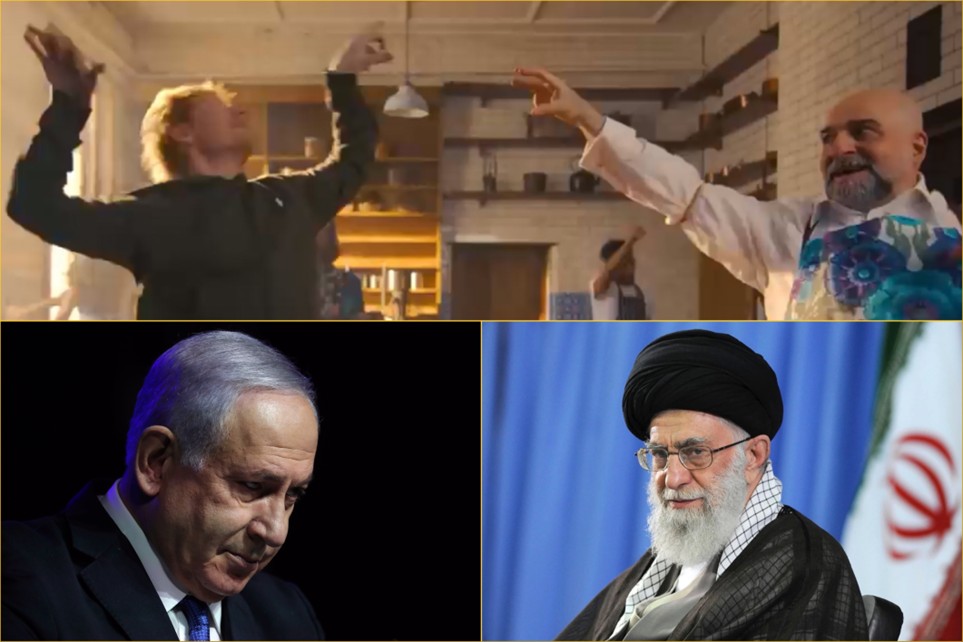
In early June 2025 Iran faced a unprecedented level of aggression by the Tel Aviv regime, directly supported by Washington. During the first days of the war Tehran was shocked by the assassination of a large number of high ranking military officers, but also large number of scholars and intellectuals. The war was in fact expected, as the war on Gaza goes on for almost three years by now, and it was the foreseeable conclusion of the events in Lebanon and Syria. Despite all that, however, Tehran during the 12 days of the war managed to turn the table and cause severe damages to Tel Aviv, eventually forcing the Americans to intervene and arrange an unofficial ceasefire.
The very fact the Iranian leadership survived the onslaught and could hit back effectively was on its own a great success, if we take it into consideration that years of preparations led up to this shocking offensive, in which Tel Aviv used the bulk of its assets it had imbedded for years.
Whichever way the results were argued, the main events of the war are clear. Under the disguise of the nuclear negotiations with the Americans, either with or without the knowledge of Trump a full war was prepared. Yet the goals, the main motivation for the war was always less clear. The main argument was the alleged Iranian nuclear program and the goal was perceived as to stop it. Yet the Iranians from the very beginning of the war claimed that Tel Aviv’s real aim was to achieve a ‘regime change”, following the Syrian model. This was corroborated by the statements of the Israeli regime in the first days of the war, only to be retracted to the nuclear arguments once the war was not progressing the desired path.
But was this regime change really a goal? And how a pop song is highly linked to this project?
The pillars of a regime change
From the first days of the war it was clear that the Israeli onslaught had to key components. The elimination of the majority, if not all of the Iranian political and military establishment, and to cause chaos to paralyze the state and the consciousness of the people. The first seemed – and still claimed – to be highly successful, killing between twenty and thirty military commanders mostly from the Revolutionary Guards, nuclear scientists and intellectuals, and a number of politicians. Yet the success was far from the desired, as later Iranian reports proved the assassination attempt against Supreme Leader Hāmeneī, President Pezeškiyān, Foreign Minister ‘Arāqčī, or former Supreme National Security Council Secretary Šamhānī. Only these attempts failed. The other aspect, creating nationwide chaos failed even more. It was clearly expected that after waves of protests in the last few years, in case of the loss of the military and political leaders the protests would start again and the establishment would buckle. Yet, from the very beginning not only protests did not break out, but the political opposition rallied behind the state and the people started to actively help the authorities finding the Mossad cells and the bomb and drone factories imbedded within the country.
However, simply breaking a leadership is insufficient for a regime change, if no alternative is presented almost immediately to take over and eventually form a complacent government serving the interests of the aggressors. But just what elements was Tel Aviv betting on? The main front for a new government was very clearly the son of the last Iranian reigning monarch Moḥammad Reẓā Pahlavī, Prince Reẓā, who by now at the age of 64 lived most of his life in the US. Though he regularly advocated in the Western media a complete regime change in Iran which he is willing to lead, he has very little experience and even less charisma to do so. And even the umbrella organization of different opposition groups he managed to cobble together in Paris in 2013, the Iranian National Council for Free Elections ended up denouncing him and falling into obscurity. Nonetheless, he could serve as a front providing some form of legitimacy after a takeover, and his weak personality would make him ideal for serving the sponsors’ interests. As given that there is a level of longing in the Iranian society for the monarchy – much more in the Western diaspora -, he could serve as a useful asset. Which in the last few years was clearly acknowledged by the Israeli establishment, Reẓā Pahlavī kept appearing ever more frequently in Tel Aviv meeting with top officials.
Yet his weak personality and lack of organizational skills make him suitable for noting more then a thin layer of legitimacy, not to be the real organizers of change, or a leader of a strike force. Than role is more reserved to a dissident group, which by now formed into a cult. That is the infamous, though in the West relatively unknown Sāzmān–e Muğāhidīn-e Halq-e Irān, or the Iranian People’s Mujahideen Organization (MKO). This organization was born in Iran under the monarchy as a radical movement fighting against the Shah and the American influence in the country. After the death of the founders a young activist called Mas‘ūd Rağavī became the MKO’s most prominent leader, and during the Islamic Revolution – in which the MKO was a supporting participant – he took over the leadership of the organization. Rağavī even ran for the presidency, only to be barred by Ayatollah Homeīnī, after which he turned against the new establishment starting a political assassination campaign. In 1981 Rağavī left Iran to France, only to appear in Baghdad by 1986 with thousands of his followers on the payroll of Saddam’s Iraq. And thus the MKO supplied by the Iraqi army during the war with Iran took arms against its own country. Yet even after the war had ended the MKO was a useful asset for Iraq for internal security tasks, and mostly remained there until the American invasion in 2003. Curiously, however, even after the Americans took over, the MKO remained in Iraq largely unharmed at Camp Liberty.
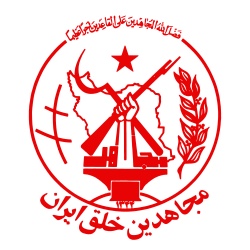
Around 2003 Mas‘ūd Rağavī disappeared, by all likelihood killed, though the MKO holds that he is still alive and hiding. His role as the leader of the organization was taken over by his wife Maryam Rağavī. The MKO eventually had to leave Iraq in 2016 briefly relocating to France, only to move to Albania in 2018 setting up Camp Ashraf as a practical enclave with substantial American support. Nowadays the MKO holds yearly summits inviting prominent Western politicians, and Rağavī talks about democracy and freedom in Iran, though still holds on to its original socialist-communist symbols, and its members appear deeply religiously conservative. The reality is more of a cult, yet with thousands of supporters, mostly Iranians. In the last two decades the MKO has provided support for American and Israeli intelligence services to infiltrate Iran and it is alleged that they were involved in a large number of assassinations. The MKO has a following of thousands of devoted fighters, though their estimated full membership don’t go beyond 10,000. The problem is that even though they allegedly have good connections to the Iranian diaspora in the West and with Western politicians, they are universally despised in Iran and a terrorist network, and not just within the government supporting circles. They can provide some muscle, but are incapable of rallying national support.
One other major component of a possible regime change are the members of the Bahá’í faith, at least according to Iranian state sources. That religious movement traces its origins back to Iran in the the middle of the nineteenth century, when a religious leader, a self proclaimed messiah called himself the “Bāb” the “Gate” and founded an offshoot branch – by now religion – of Shii Islam. He was eventually executed by the Iranian state at that time, but he left the leadership to one of his disciples. That new leader’s brother, who actually never met the “Bāb” claimed authority over the movement and named himself Bahā’ Allah. He also claimed himself to be a messiah, who was eventually put into prison, than expelled into the Ottoman Empire, only to live his life in the Ottoman ruled Palestine in house arrest. There are various accounts of the true size of the followers of this highly syncretistic and esoteric religious movement, but generally accepted to be somewhere between 5 to 8 million worldwide. Their biggest community is in India, but allegedly the biggest growth is in the West, mostly the US, with still some following within Iran. Their secretive nature and collective leadership made them banned in most Middle Eastern countries, especially Iran, where they have been persecuted and generally considered to be heretics and trying to infiltrate the state. It probably also does not help that all their sacred and administrative centers are in Haifa, where the otherwise not too tolerant Israeli authorities show an interesting sympathy towards them. They also have a long history of animosity towards the Iranian state – in its current and all previous forms -, which also led the Iranian state to increase the ban on them. Several political and civil rights campaigns are alleged to be sponsored by the Bahá’ís and most recently about the 12 days war former Iranian diplomat and political analyst Amīr Mūsavī suggested that they were part of a military coup attempt against the state. Which is given their good connections to the Iranian diaspora in the West is not at all impossible.
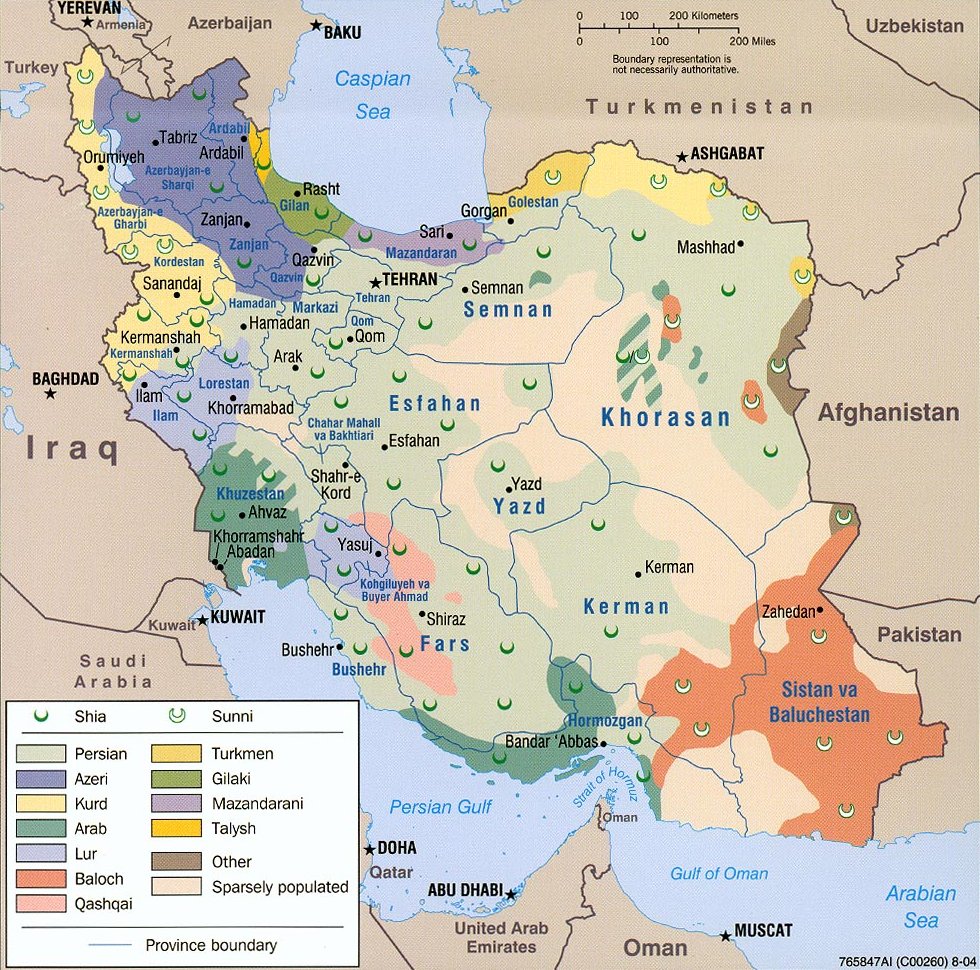
All these organizations tap into the monarchical sentiments of the Iranian diaspora in the West and the growing similar sentiments within Iran itself among the youth. Especially amongst the educated classes. These desires for a less religiously rigorous state combined with the aspirations of the ethnic minorities in Iran could in theory lead up to the meltdown of the Islamic Republic. There is little coherence between these vastly different groups with completely different agendas, and that is why a figurehead leader – however insignificant – is essential. And that was clearly the recipe in Tel Aviv not simply to break the Iranian government, but also to pave the way for partition. Just like in Syria.
The use of the imagery
As said before, the various ideological groups that Tel Aviv and Washington are betting on for a regime change are vastly different. Yet they all tap into the same monarchist sentiment and accordingly use very similar images, symbols. One of these is the old mythical symbol of Persia, the lion holding a sword with the sun on his back. This was the official centerpiece of the Iranian flag under the monarchy until 1979, when it was changed to the stylized form of the Arabic written word “Allah”, meaning God.
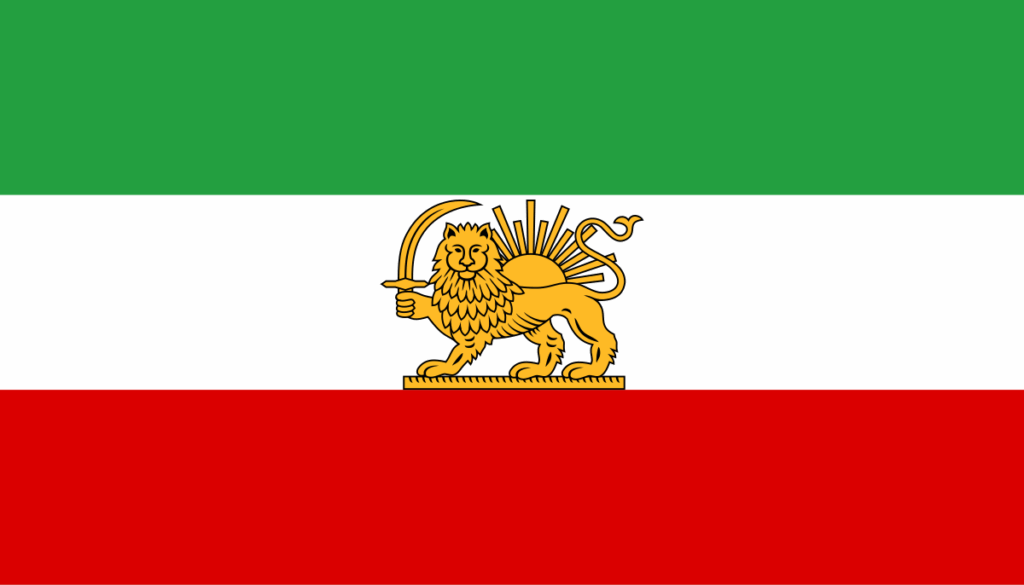
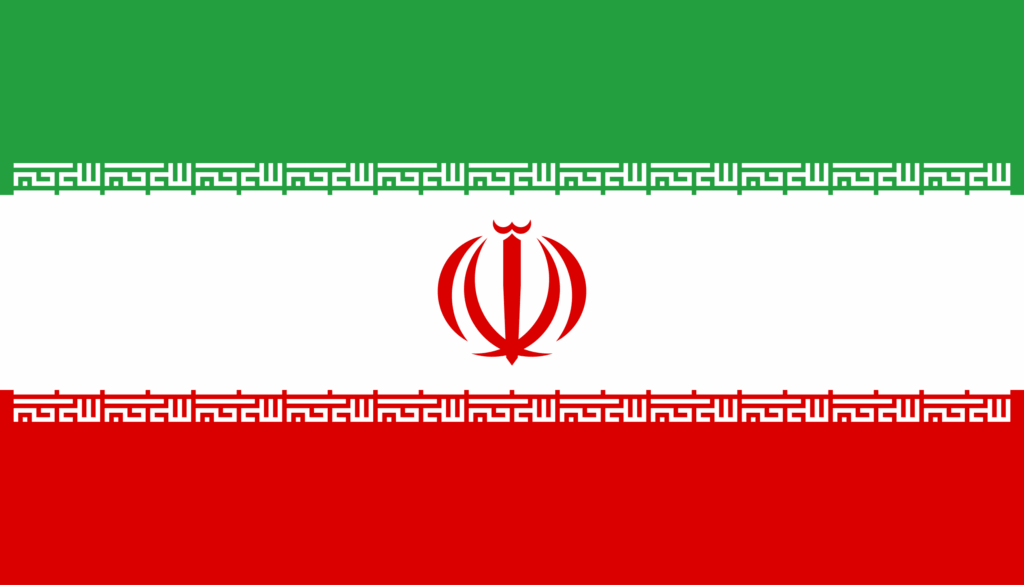
The MKO, despite its communist style logo widely uses the monarchical flag in all its political rallies. Which has the clear aim to appeal to the national spirit in Iran and the monarchical nostalgia, even though the MKO itself almost never talks about the monarchy.
The same symbolism was also very relevant during the recent war, as Netanyahu named its offensive Operation Rising Lion. With the idea that the mythical lion is about to return. Which is an appealing message to the monarchists, the followers of MKO, to the dissident diaspora in the West, but also to many nationalists – and anti-religious groups – within Iran.
Also tapping into the nationalist spirit, Netanyahu in several of his speeches made a very twisted religious reference to Cyrus the Great, the first great king of the Old Persian Empire, who appears as a very positive figure in the Bible. He was the one, who ended the Babylonian captivity of the Jews and allowed the rebuilding of the Jewish temple. And thus Netanyahu made the reference that just like back at that time Cyrus saved the Jews, now the Jewish state would save the Iranians.
These symbolism might mean little in the Western political debates, but has a very important role in the mind games that are used against the Iranian population to make all steps, all movements trying to change the current Iranian political establishment more appealing. Or at least shift the narrative from a “regime change” script to a national debate, sidestepping the supporters of the these movement and the true motivations behind them.
Azīzam, the role of an “innocent” pop song
And just how far can the mind games go and how sophisticated they can be there a pop song can perfectly illustrate.
In early 2025 an intensive advertising campaign was lunched for the new album of the well known talented English pop superstar Ed Sheeran, called Play. The lead song of that album, which was the first single to come out – and so far this is the most successful single of the album – is called Azizam, which in Persian means “my dear”, or my “beloved. Around two months before the single was officially released the song was heavily marketed and finally it was released on 4 April. The later singles came out in May and June, while the full album is expected to be released only in September.
Even before the single was released it was heavily marketed for the Western Iranian diaspora, and in March – so before the single was released – Ed Sheeran even gave an interview to Jimmy Fallon in the Tonight Show, constantly referring to it as a “Persian” song. Right after the interview they even performed the song in the New York subway. Interestingly in an interview about it Ed Sheeran himself said the following about the song:
“Even though it’s completely different to anything that I’ve ever done before, ‘Azizam’ feels familiar to me… I wanted to create a party atmosphere in a song and Ilya Salmanzadeh, who I worked with on the track, helped bring that to life … It was like opening a door to a completely new and exciting world”.
Meaning that by his own admission that was something “completely different to anything I’ve ever done before”, and it the Iranian producer Ilya Salmanzadeh, who largely created the song. Salmanzadeh was born in Iran, but still as a child moved to Denmark and later to Sweden and later on had a very successful songwriting and producing and even singing, working with such names as Ariana Grande, or Jennifer Lopez. Azizam is also his first Persian language song, for which he found Ed Sheeran, with whom he had never worked with before. While the song and its lyrics are catchy, but nothing significant, the video clip debuting in mid-April 2025 was loaded with messages.
(Source: YouTube, Ed Sheeran official account)
The clip features Sheeran with Salmanzadeh in a studio struggling to find idea for a song they want to make, when he slips and falls into a vision like dream. In the vision he arrives into the middle of a Persian style party, with Iranian food, dance and meeting several celebrities of Iranian descent. The songs ends with Sheeran returning to consciousness in the studio with famous Iranian singer Googoosh, telling him to hurry up writing the song.
The song with its catchy music and generic love lyrics has seemingly no connection to the clip, but the clip is fully loaded. First of all with going through all the possible political messaging of a party with Iranian food and dancing. It should be understood that while officially in Iran partying, Western style pop music and public dancing is forbidden, Iranians love these things. And despite the bans, such house parties are not uncommon, especially in the big cities. So much so that the 2006 comedy movie called “Wedding Dinner” produced and aired openly in Iran made fun of these parties and how the authorities try to crack down on them. So the clip hits a nerve of something the Iranians love and do, even though now it is officially forbidden. Signaling, what if this could change. During the clip the first Iranian celebrity Sheeran meets is British born comedian Omid Djalili, who had some success in Hollywood as well, usually playing a comically awkward Arab character.
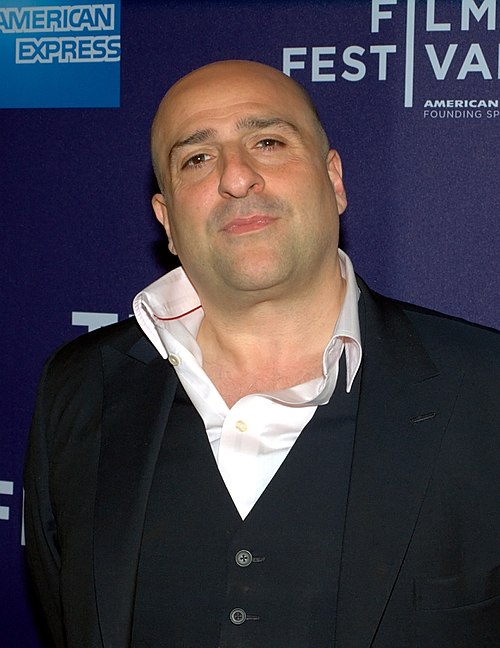
Djalili might be a slightly familiar face in the West, and is not particularly known in Iran, it is lesser known that he is of Bahá’í descent and a practicing member of the movement, otherwise regular participant of anti-Iranian protests in the UK.
Within the clip Djalili acts as a puppet master moving Sheeran around, which might be a very direct reference to real life events. Later on the clip Sheeran falls into a party, where one of the party members is Andranik Madadian, an Iran born Armenian singer, generally known as Andy. Madadian emigrated to the California after the revolution in 1979 and had a somewhat successful career as a Persian language singer, but he became particularly well known in the large Iranian diaspora in Los Angeles. Though in general he is not politically active, it is well known that he is also a critic of the current Iranian state. Interestingly though in the clip he has practically no role and only sings vocals, be surely his appearance hit a chord with Iranian Americans.
At the end of the clip when Sheeran returns to the studio from his vision, he is woken up by Googoosh – her original name is Faeghe Atashin – who is a living legend of Iranian pop music. She was extremely popular during the monarchy and was at the peak of her career in the ‘70s. She was in American when the Revolution took place, but was one of the few musicians who returned. However, her songs were all banned for being too tied to the era of the monarchy and creating too much nostalgia, and never managed to break out of silence. That is until 2000, when after 21 years she left to Canada and has a successful comeback with her concert tours. She also became a harsh critic of the Islamic Republic after her move to Canada, also participating in a number of protests and openly calling for protests within Iran.
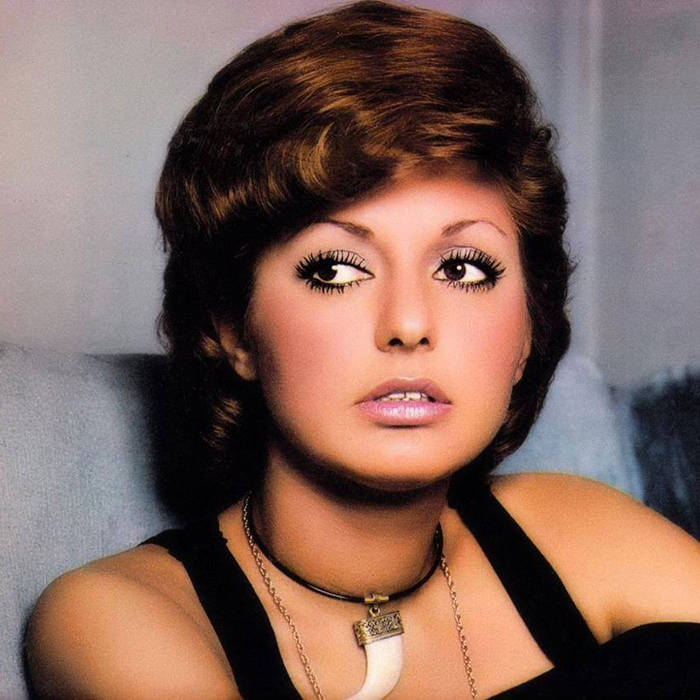

Despite her political activism in her later life, she always remained a pop diva for all Iranians inside Iran and abroad and her songs from before the revolution are still considered hugely popular classics.
Interestingly in the clip she also has little role, she does not even appear until the last segment, where she wakes up Sheeran urging him to work. The clip’s subtitles claims she says: “Let’s go write a hit song. Hurry up!” Which is in fact false, as in Persian she says: “Azizam, let up say write your [own] song! Hurry up!” Iranians would never read the subtitles, while Westerners would not know what she really says, but the mistranslation is probably not a coincidence, as her actual words could be interpreted as, “Tell them: write your own song! Hurry up!”. Saying that they, the people should write their own song, their own fate and they should hurry up.
The clip is so loaded with images, well know Iranian celebrities all vocal critics is the Islamic Republic that the message can hardly be missed, rounding up all the stereotypes of criticism against Tehran. All using the name, fame and probably good will of a famous Western celebrity. Suspiciously close in time to the Israeli attack that was planned for years.
The song probably would have become the theme song the toppling of the Islamic Republic, or at least the new wave of protests in Iran, but that never came. And the hype around the song slowly started to fade away. However, that is not where the controversy around the song ended. Because even though it is claimed to be a song of Persian musical culture, it has only English lyrics. Yet even before the song was officially published, it gained an Persian language version. Little known American singer living also in California, Ashley Zarah, who by her own claim of Iranian Jewish ancestry, made her own Persian version, with which Ed Sheeran and his associates had no copyright problems.
And here once again the clip is full of messages. The lyrics are much more of double meaning than the original, as Zarah’s version in Persian can be understood as longing for a lover, but also waiting for something else. A “revolution” perhaps.

In the clip she is wearing a shirt with a lion, which can be understood as the mythical lion of Iran, but also as the “Lion of Judah”. She also wears a necklace with two pendants, one with Persian writing “Ashley”, while the other is the Star of David. Which is an interesting symbolism, if she only meant it for the Persian speaking audience. And here we should refer back to imagery Netanyahu used at the beginning of the 12 days war and ever since. Hardly a coincidence. Just like the sudden silence about the song since June.
And this is just one pop song sold as an attempt to bring Persian culture closer to the Western audience, but also to produce support for a “regime change” in the West.
We could also name a long list of similar mind games with movies, like the Indian film Tehran, produced in 2023, but only released in August 2025. This movie focuses of the events of a 2012 bombing of Israeli embassy staff in India, allegedly linked to Iran, though there was very little evidence to support the claim. And the film’s main star is an actor with a Zoroastrian Iranian mother with realities in Iran. It is important to note that India is a very close ally of the Tel Aviv regime providing economic and logistical support, but also cheap labor. Since the war on Gaza much of the cheap Palestinian labor force fell out, which India substituted with 10 thousand workers. So there is a very logical incentive to stir up animosity against Iran in India, though the official ties of the two countries were always good.
No, it is still not over
These are just little examples. But they show how far the psychological warfare can go in music and cinema. And that shows much much effort is put in breaking the Iranian state. It was never about the nuclear case, but much more to bring about a regime change. Because Tel Aviv knows that despite all the claims and the technological arsenal, the only way to break Iran and all what it represents in the region can only be broken from within and never with war.
And seeing Netanyahu shifting tone once again, now talking about Iran’s water shortage crisis, it is clear that this is not over. The war, just like the Iranian leadership constantly signals, has not ended in June. It only took a break for both sides to prepare to what is coming.