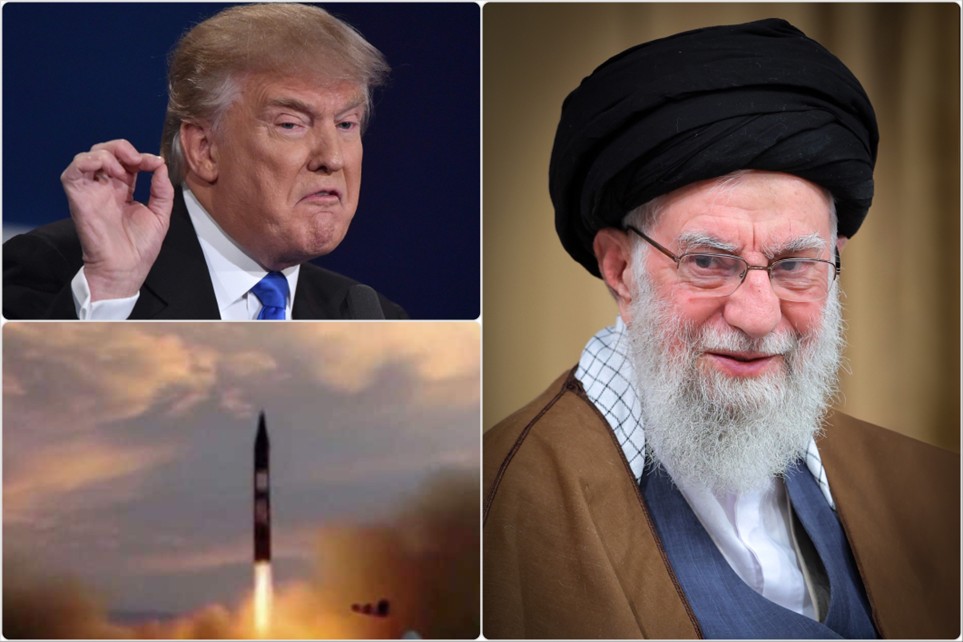
The least two to three weeks once again saw massive media attention around Iran with thought of “regime change”, violence and war. No doubt the real reasons are external and the relevance of this crisis is regional. If a major war came, the state system in Iran changed, or a civil war broke out in Iran that would have an impact on the whole region and change the equation once again.
This matters are very important, but this time we focus more on the internal side of this crisis, as it is a clear case of media wars that are fought in this age.
What has really happened in Iran in the last two to three weeks?
We need a little background for that. The current Iranian state has major economic problems for decades. The main, but absolutely not only source of that is the massive amount of international sanctions. Despite the sanctions Iran does trade with the world – with some more than others, and sells much more than just oil -, it has no direct access to hard currency needed for international trade. The result of this is that although everything is available, but relatively expensive and the Iranian currency has developed a “habit” of high inflation. The state to live with this and circumvent it, because this is the Middle East. Beyond that around a decade ago a massive privatization program was launched to boost the economy, also betting on the success of the nuclear deal (JCPOA) and the foreign investments following it. That did not succeed and the economic transformation had very mixed results in a true Middle Eastern fashion. The result of all this that although the state lives with great economic problems and learned to move around them, there is also a class that exploits the situation and greatly benefits from it. Which is not a unique phenomenon to Iran. Because of all this, in such a confusing state the Iranian economy, especially the Iranian currency is vulnerable.
This of course was not welcomed by everyone. There are circles, which does not want to give up leeching on the economy. And members of these circles are there in high politics, or have friends in high places, who otherwise don’t feel warm about the current president. What is most inconvenient for the state and the official narrative is that it is easy to point the finger to abroad and cover up the serious internal problems, it cannot officially acknowledge deep rooted corruption, because that would undermine the very legitimacy of the state system. And that state, in Iran, just like everywhere else, is “always right”. Probably that is also familiar around the world.
The new right of turmoil started on 28. The days before the Iranian currency suddenly fell massively. Commodity prices jumped daily. That is again not something unique. It is not far fetched to imagine that there were foreign hands in this and the newly reintroduced sanctions also played a role. That is the official state version today. But at the same time it is also true that those not happy with the government attempts to curb black market also played a role and the “bazaar” class wanted to pressure the state. The result was a ring of completely peaceful, limited, but very angry wave of protests. The president met with the representatives of the unions, new social relief measures were introduced and the drop of the currency stopped. The the government of President Pezeškiyān got in power around a year and a half ago tried to limit this exploitation, rationalize the economy, “drill the swamp”, so to channel the liberated resources into social welfare programs. Than on the 8th and 9th of January the chaos started, as groups of 20-50, sometimes hundreds launched organized attacks against public institutions, hospitals, mosques and buses many times murdering policemen in the most brutal bestial fashion.
There are many stereotypes about the Middle East, but all that is absolutely alien to Iran. Burning down buses and mosques, beheading policemen on the middle of the street is just as alien to daily life in Iran than to Japan. And the foreign hands were very clearly and admittedly present in so many ways, for which just one clear evidence that in the city of Kermanshah – relatively close to the Iraqi border – groups of Kurdish separatists were present and killing civilians and policemen alike in the streets. The presence of foreign agents at these massacres are not only attested by the evidence, as not everyone trust the sources that publish them, but also by the public statements of American and Israeli officials just as well.
It is very difficult to clarify the connection between the peaceful protests caused by economic concerns and the wave of brutal violence, and even more difficult to prove either way. Everyone can have their opinions, but there is very little solid proof the establish any definite link. Whatever caused that wave of brutality, in its second night Iran shut down the internet and managed to jam Starlink as well, which is on its own a major technical feat, and suddenly the riots disappeared almost instantly. And right after the state managed to bring millions to the streets to demonstrate supporting the government and condemning the vandalism.
There are certain points worth underlining. First of all the protests from the very first day attracted huge media attention keep presenting that the protests are everywhere, the “regime” is about the fall, or has already fallen. That was especially strong in the social media platforms, but legacy media also took its share, posting news and videos by the dozen about the protests. A good portion of these – true, absolutely not all of them – were from either protests from previous years, or not from Iran – like from Greece -, or showed real protests with altered sound. In these people chanted very different slogans that those presented. And in the forefront were the influencers from the US and Tel-Aviv with hundreds of fake, but sponsored accounts. The same thing also happened in the Arab world, primarily in the Gulf. The fact that from the very beginning there were hundreds of fake accounts posting largely fake footages, immediately followed by political statements, like Trump about “help” being on the way, on its own questions how spontaneous these “protests” were. They weren’t. The bigger question is whether that these exploited the economic crisis and the uproar, or that was all one big plan.
But what happened during the internet blackout? That is a very serious question. The state portion is that if all what had happened was organic, if indeed the people rose up against the state system, than how it all collapsed immediately? Because there are no protests now, quite the opposite, there are demonstrations in support of the state. And here the state narrative is that the organized cells of destruction lost their connection with each other and with their handlers abroad, and through the Starlink connection most cells were traced and apprehended.
It is also conceivable that in the “darkness” of internet blockout the state foiled the protests by force, crushed it live fire and mass executions. That is the version more or less presented in the Western media. There is a clear contradiction between the two. Yet by now the internet largely returned and there wave of evidences started to poor in.
It is one thing what the state presents, but it is telling that there is not one video, now one verifiable footage showing mass live fire by the police. If the protests were crushed by executions, in this digital age it is impossible not to have evidence of it. Because there are footages of beatings, street fights, clashes, but not of mass shootings. Yet there are dozens of videos showing the brutal executions of policemen and civilians by these groups. Which is not presented in the Western media, for “some strange reason”. That alone disproves the narrative of “peaceful protests”, even if the state truly used force. The even bigger question is what kind of protests are those that burn down hospitals? That can be understood, while we categorically condemn all forms of destruction, when protesters attack ministries, government offices, police stations, the state tv, even banks. Such scenes were witnessed in the West as well in the last 30 years. But everyone should think about themselves! How normal it is to burn down hospitals, or shops? How “natural” it is to brutal execute policemen and desecrate their bodies? How much is this about welfare concerns? If these were truly “peaceful protesters”, how come hundreds of policemen and soldiers, many officers died? And if the state was truly rampaging in a massive killing spree, how could it take millions to the streets in support?
So, what did happen? There is an increasing number of sources shared and the internet comes back. We strongly encourage everyone interested, to look at these themselves both from the government’s and the opposition’s side and don’t take for granted what is said by any sides, including this one. And whoever is truly interested, technology today can help a lot, even if you don’t have Persian speaking friends around.
The biggest cliches
- The Iranian “regime” is in its biggest crisis ever since the Revolution in 1979!
No. The war with Iraq right after the revolution was a way bigger problem. But even since the current conditions solidified in Iran and the transitional condition moved into the current one there were at least two crises bigger than this one. The one in 2009, when the re-election of Ahmadinežād was heavily disputed, whether it was legal, the Green Movement was born and massive protests ruled the streets for weeks. That was a way bigger challenge, as the opposition of the state system was the state system itself. The disputed president and the state power behind him was in dispute with the former Prime Minister and a long list of prominent politicians. It was a matter of state integrity. And it is very debatable how much the state ever got over this division.
From the protests at that time there are footages of police brutality, or that unarmed protesters were shot, who died. And since than technology has only improved.
Also the Mahsa Amīnī protests from 2022 posed a way bigger challenge. That eve of protests went on for more than a year with also documented cases of deaths and aggressions. It is noticeable that even ba the wildest claims during those protests lasting for more than a year less than 600 hundred people lost their lives – and only a handful of policemen and security personnel -, while now even the state says more than 2500 people died in only two days. That is more than all the victims of the 12 days war in June. The Mahsa Amīnī protests, though the basic claim was not true, meant a way bigger problem. On the one hand a significant potion of the society felt the problem vital and truly wanted change in the matter, while on the other hand the state system was defending one of its more core identity pillars, and behind that were the most devoted supporting social groups. Because a significant part of the Iranian society, though probably not the convincing majority, support these dress codes. Can the state give the support of its most devoted backers in such a symbolic question, only to favor classes, which will always be against the state system, no matter what. Of course that is not possible. The result was – based on first hand experience – an unspoken and unwritten compromise, in which the headscarf policy remained, but in reality it is very loosely enforced.
These were way bigger problems, which hit the very core of the state and in these matters it was really hard to point the finger in the foreign powers. Though the Iranian state did not hesitate to do just that, very unconvincingly. It is true that rallying people with basic livelihood concerns is much easier, but it is also easier to blame the foreign powers for that and defuse it with a few fast appeasing measures. So the current crisis, despite the level of destruction, meant a way more manageable, an essentially security challenge for the state.
- The Iranian “regime” is supported by just 10-20% of the society, a thin social class.
No numbers in this regard should be trusted, as there was no such serious study done of the subject. It is even very hard to do such survey. The last presidential elections had a turnout of around 50% of the voters, which is not only high in the region, but even by Western standards is not particularly bad. But even those who did not participate are not necessarily staunch enemies of the current state. Mainly due to economic concerns, but also by other reasons there is a level of distrust towards the state, or the actual government at any given time. That is absolutely true. But just because there are many, who have concerns about the state, or its institutions that does not mean that all want a different state system.
And here everyone can think about examples closer to home, or just think about the US. Are there people who cannot stand Trump being the president? Are there people who hate the whole system, including Biden, Trump, Harris, Vance and all of them? Clearly we are not talking about small numbers here, who are displeased with all of them. But do these people want the complete dissolution of the constitution, the government system, all state offices? Do they want the restoration of a British style monarchy, the introduction of Communism, or any other type of government system? Clearly not much. Much rather people want the same conditions functioning much better. Despite all rumors and stereotypes, the current Iranian state system has deep rooted social support and there popular representation.
- The Iranian opposition is very strong and only the armed services keep the “regime” alive.
That is a way more complex matter, as the current government has serious opposition, which is not opposing the state system. The type of opposition that is almost exclusively presented in the Western media can be categorized by two major groups. The monarchists and the supporters of the Muğāhidīn-e Halq (MEK) cult like movement. The latter is a long and complex topic on its own. Their hands reach very far, but they have a very marginal support, not a true mass support base in the country. The mass core of the monarchist opposition on the other hand lives in the West for decades now, or comes from the upper classes of the great cities, who never saw the misery of the ‘80’s and the ‘90s. They live with a nostalgic image about the monarchy, like many in the West about the good old day, or in Russia about the Soviet Union, completely disregard the downsides of these eras. This movement has wishes, desires, but no real leader, and its figurehead Crown Prince Reza is such a weak politician that he could clearly not run a state. That does not mean that the monarchist movement does not have a mass support base. It does. But they will never go back to Iran whatever happens. The Western medias loves to build opinions on the statements of this movement, but building policies solely on these voices would as accurate, when Afghan puppet politicians were talking about state and social engineering in Afghanistan for twenty years. Not the best. That would be a huge mistake.
- A military intervention “eliminating” the leaders would make the “regime” collapse immediately.
Such statements not only fail to see the true nature of the Iranian society, but are also lacking serious knowledge about the nature of the Iranian state institutions and armed services. The Iranian armed services are very deeply rooted in the society and has deep ideological basis, the leadership is multilayered. The war in June showed it completely that even the loss of the top commanders at the same time does not mean the break of command and the army does not lose its combat effectiveness. So even is the state would lose hundreds of its leaders and somehow a foreign power could install a new administration the result would be civil war. Such organizations would not collapse for a very long time, based on their ideological foundations, and because they are truly deep rooted movements. Far not everyone supports them in Iran, but a very large number does, and they are very devoted.
- The social media posts might be full of Israeli support and the “regime change” might come with American and Israeli military involvement, but they only want to liberate the Iranians. This is all about the liberty of the Iranian people.
This is everywhere in the social discourse now and one of the most used lines by the monarchists.
One should take it into account what has happened in the last more than two decades with Iraq, Afghanistan, Libya, Yemen, now Syria and to Gaza in the last three years. Especially how well Afghanistan turned out, or the still ongoing massacres in Syria.
Whoever believes this line even after taking these examples into consideration simply wasted his time reading these lines. He has a conflict with reality.
What to expect? What is coming?
By all indications the situation is once again heading towards war. Very clearly that is what Iran is counting upon. The ever growing power concentration in the region signals the same thing. But there are a few noteworthy signs. The main center of the American power buildup this time is not the Gulf, but a vase in Eastern Jordan. Meaning that apart from the Emirates the Gulf states want to evade the war. In the middle of last week the situation was already very close to war, and according to various reports there was serious Saudi and Qatari pressure on Washington not to start the war.
It is also very clear that Netanyahu wants and needs the war and to open new frontiers. And that the Americans have to do the majority of the task. Yet at the same time America cannot afford a long war, it has no internal support for that and no economic background either. It is also very noticeable that news are coming in daily about the waves of American planes and ships moving into the Middle East, there are no news about serious land power concentrations. Which would indicate that no invasion is coming.
Let us compare the situation with the invasion of Iraq. Both in 1991 and in 2003 Washington attacked after an overwhelming media barrage with a well established, though completely false, excuse and with a wide coalition being supported by almost all states of the region. There was practically no criticism within America whether the attack is lawful or not. And Iraq had no supporters to speak of. None. Today America can only count of the British and the French, and the wore down Israeli troops they themselves armed. Meaning they are not a big addition. Most regional states oppose the war and Iran has the direct support of states, like China, Russia, or Pakistan. These will probably not step up militarily in case of a war, but can provide vital support.
Therefore the most like scenario is that with an other invented excuse very soon there will be an American-Israeli strike aiming at Supreme Leader Hāmeneī, President Pezeškiyān and most of the military leadership. It might even succeed. And here clearly the Venezuelan script is in their mind, the elimination of the leader with a new leadership too terrified to resist staying power for some time. This way they would prevent a long war, the losses and it will look good in the media. The experts will praise Trump once again.
Well, even if the operation would succeed, the leaders will be replaced swiftly. This will not cause the collapse of the state system. Just like the loss of the top military leaders did not cause the collapse of the Iranian Army in the summer. Iran swore not to retreat if attacked and all American position in the region be targeted and all that can be done against Tel Aviv will be done. Meaning that it promises Washington exactly what it wants to avoid, a long crippling war, from which there will be no easy escape with a swift compromise. Because it is clearly understood in Tehran that these attempts, like in the summer, or now will only multiply, unless the Americans are pushed back now. If the war comes that will be devastating for Iran, but the Iranian society is such that will stick together even more and the internal divisions will decrease. All indications for this was visible during the 12 days war. And it will also make Washington think again that the Chinese and Russian weapons supplies are constant for Iran now, so no one can be sure what they hand over to Iran, and what would they in case of a protracted war.
Meaning that is the war is avoidable, it is because that has become too much for Trump. He has too little time to act and the risk is too big. Either way, the upcoming weeks are critical.
If anyone is really interested in this topic I suggest watching Iran went through in the last 50 years through this long compilation.
Watching more than 5 hours of footage is not a small task, but doing so i would bring his attention to three things for this. One is that the American media keeps asking the same exact questions for 40 years without the slightest shame that all previous claims were false. Second is that even right after a long war with Iraq the ordinary Iranians, even the soldiers did not see the Iraqi as their enemies, knowing full well that Washington causes the real problem for them. And finally how were the streets looking in 1980 and how do they look now. Anyone visits Iran now can see the progress. All under the strictest sanctions in the world. Whatever comes that is the undeniable success of this state.