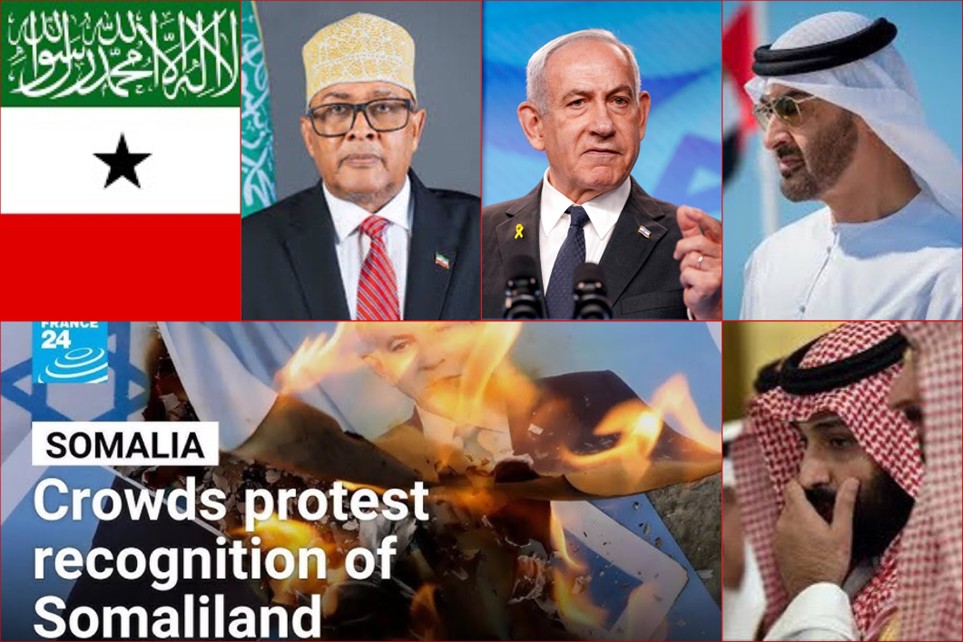
As one of the last major events of 2025, on 26 December the Tel Aviv regime unilaterally recognized Somaliland, a part of Somalia as a sovereign state. Once again the legacy mass media claims a lot of misleading notes, as Tel Aviv being the first to recognize it, but still largely guesses the the reasons.
Was this to gain a foothold close to Yemen and use it as a base to eliminate the al-Ḥūtī government in Sana’a? Or to take control over the Strait of Bāb al-Mandab? Or this will be the place where Tel Aviv want to expel all the Palestinians, especially from Gaza?
Though the Netanyahu regime was not the first to recognize Somaliland as a separate state nor in practice, nor in theory, as Ethiopia did just that roughly a year earlier, it is a curious move. Most of all because Tel Aviv moved alone. Unlike its typical nature, it did not drag along the U.S., some of its European vassals, or at least Canada. Though with Trump on the leash nothing would have been easier, as the steps against Iran is a clear proof. More so that only days later Netanyahu was with Trump in Florida. And even there the matter was not even raised.
That alone, more than anything indicates that this is a PR stance, not a real political strategy. That is perfectly reflected by the fact that all international organizations concerned, the U.N., the Arab League – to which Somalia is a member – and the African Union condemned the move and deemed it illegal. And in such an environment, alone, seemingly without partners, any attempt to exploit this recognition for military occupation, or to use it as springboard for other operations will be practically impossible.
But in this case, what is this really about? What we see is part of a way bigger game that has now went into action in Yemen. And completely overturned the regional chessboard.
What is Somaliland and why is it significant?
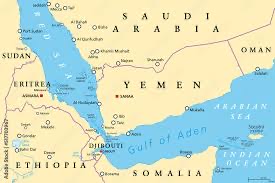
But what is Somaliland and where is it? Somaliland is part of the federal republic of Somalia on its northern coastline along the Arab Sea facing the Yemen, almost at the southern exit of the Red Sea, the Strait of Bāb al-Mandib.
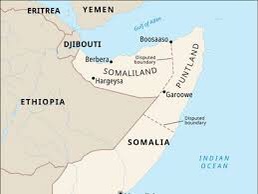
This land at the Horn of Africa was under British control, unlike the most part of today’s Somalia, with not entity different population, but inhabited by other clans and having had a different colonial past. Eventually with the British withdrawal in the 1960 Somaliland became part Somalia. Thus had a brief experience with the unification attempts within Somalia, until its central government started to fracture.
In 1991, when the former stabile central government of Somalia started to fall apart Somaliland tried to break away. This lead to a bloody war to quell the insurrection, which eventually failed as the government in Mogadishu completely fell apart and Somalia slipped into a bloody civil war. In result and practically to this day Somalia though remained as one state, fell into a series of self governing entities under a federal system. Within this framework Somaliland regained its limited autonomy, but remained without partners to cultivate its separatist ambitions. At least officially. It was orbiting to be under the influence of Ethiopia, but since the ‘90 Ethiopia also kept facing insurgencies and recurring instability. Thus bringing Somaliland firmly under the Ethiopian influence increasingly challenging. And this void was gradually filled by the Emirates, especially after 2000s.
Predominantly under the cover of its charitable organization the United Arab Emirates (UAE) built up a very strong political presence with the local autonomous government of Somaliland. This is not at all a unique thing to see, especially in the Middle East, but rather the trend, as many states with power-projecting ambitions do the same, like Turkey famously with the Turkish Cooperation and Coordination Agency (TIKA) sponsoring cultural project from the Balkans to North Africa, only to use this influence for building an economic and eventually political foothold. Within these measures the UAE created a massive presence in Somaliland bringing in and paying for waves of Arab professions from doctors to teachers to increase the livelihoods in Somaliland. Which is still very limited, but turned the separatist region into a de facto Emirati vassal. And this presence was eventually used for a tacit military buildup as well, most noticeable used for the military operations in Yemen since 2015, and taking over the Yemeni island of Socotra, right next to the Bāb al-Mandib. And Socotra became the pilot project for the Emirati-Israeli military cooperation, as Abū Zabī invited Israeli troops building a small base in the island under Emirati backing and cover.
So, Somaliland is clearly a piece of a much bigger puzzle bringing the Tel Aviv regime closer to the UAE.
The three power blocks of the Middle East
We have dealt with the view several times before that in the Middle East there are only three power blocks that have a clear vision about the future of the region, have the ambition to form it, the ideological depth to attract followers and the means to achieve goals. Though it should be pointed out that several regional states, like Algeria, or Egypt have significant influence and some ambitions, they don’t firmly belong to any of these blocks and don’t have the means to significantly dictate policies for the region. And thus swing from time to time between these blocks. That, however, does not mean that they would be intimately involved in the making of the policies of these blocks.
The first block is probably the most well-known, the so called Axis of Resistance, once built on the firm alliance between Iran and Syria, being augmented with their allies in Lebanon, Iraq and Yemen most significantly, but with some other smaller political actors in other regional states, like Bahrain. This block is built on the firm doctrine of regional self-reliance, cooperation between the members with non-interference in their local matters and the rejection of outer colonial/neocolonial presence, especially by the West with the U.S. at the top of the list. Thought from the Iranian side it was augmented by a characteristic Shiī doctrine with an conciliatory approach towards all other religious communities. With the collapse of Syria in December 2024 this block was presumed to collapse, yet interestingly not only remained strong, but even gained a clearer ideological depth, as the contradiction between the Iranian theocratic thinking and the secular Ba‘at ideology was removed.
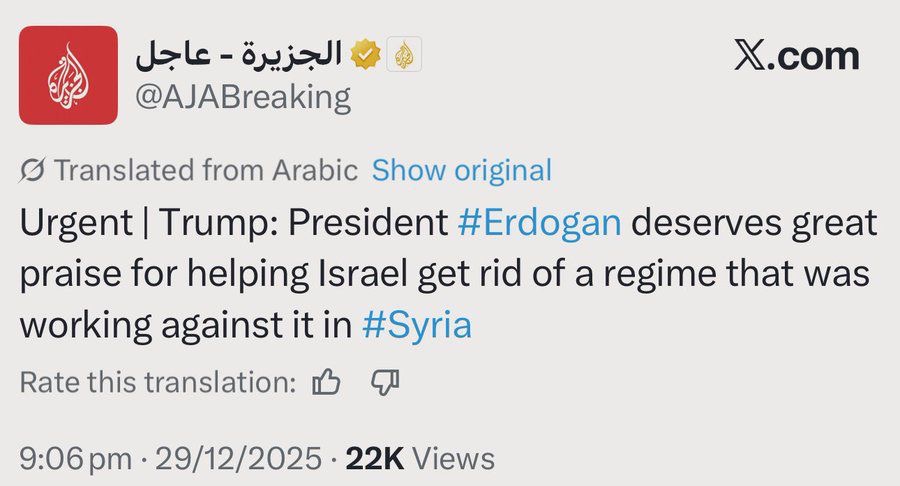
The second block is the still very strong Turkish-Qatari tandem, based on the ideology of the Muslim Brotherhood, building ideological footholds all over the region. This block is not at all in opposition with the American hegemony in the region. That is clearly evident by Turkey’s NATO membership and Qatar hosting the biggest American base in the entire region, the al-‘Udayd Air Base, which is the service hub for almost all American-NATO strongholds and operations in the Middle East. The second being Incirlik in Turkey. The main approach here is to gain regional control under American oversight enjoying lucrative economic ties, but building up its own influence in the regional states to be the best service providers of Washington. So unlike the Axis of Resistance, this is a partnership approach showing the benefits for this to Washington and enjoying the benefits under American protection, though many times bowing to the wishes of the White House, or even taking humiliation. That was also demonstrated during the last 12 months, as Turkey was the main facilitator of the collapse of Syria, for which it now struggles to gain the benefits, but suffers the humiliation, as Trump humiliatingly and shamelessly placate Erdoğan as a servant of his own and Tel Aviv’s ambitions.
The similar humiliation hit Qatar as well when recently the Tel Aviv regime bombarded its capital with even the slightest remorse, or protection from the Americans, after which no punishment, or even retribution was offered, Qatar and to bow even lower. It is very noticeable that both of these instances went without almost no comment from Ankara, or Doha, casually moving on, as if nothing happened. That subservience, however, does not mean that this axis is not extremely powerful based on Qatari money and Turkish military and manpower, with very clear ambitions to be the regional number one partner of Washington.
The third block was based on the Saudi-Emirati alliance, in which despite the difference in size and apparent moral status, the Emirates is the more influential power. Ideologically this block is also based on a strong Sunni Muslim religious doctrine, but firmly rejecting the Muslim Brotherhood. Nonetheless, the ideological bases of this axis, though much lighter and elusive than the those of the other two blocks, is clear, built of the idea of being the moral bastion of Arab nations augmented by the moral legitimacy of Sunni Islam, as the two most sacred cities of Islam are in Saudi Arabia. Less emphatically, however, the strategic approach of this block is practically similar to the Qataris-Turkish axis, regional dominance to be the local facilitator partner of the American hegemony. What is also important that while there is no major contradiction between these last two blocks both relying on Western support, there is a very strong strategic antagonism because of the deep rooted and irreconcilable divide between the UAE and Qatar.
What makes this block less stabile than the other two the Saudi Arabia is a less reliable partner in regional blocks, having little ideological depth in regional thinking, imagining itself as the practical overlord, the “big brother” of all the smaller Gulf states, and the main partner of the U.S. A practical equal. And thus Riyadh has a tendency to bend its regional alliances whenever seem fitting. When the so called “Arab Spring” started in 2010 Riyadh was willing to support the transforming efforts of Qatar, but when it broke down with Syria clearly resisting, Riyadh had no problem turning on Doha. It allowed itself to be convinced by the Emirates to “punish” Qatar and demolish its growing regional influence. That led to the 4 year long blockade by Saudi Arabia, the Emirates, Egypt and Bahrain against Qatar aiming to bring about a “regime change” with a total economic, areal and land blockade. This strong Saudi-Emirati understanding, and probably the strong personal influence of by now Emirati ruler Muḥammad ibn Zāyid over Saudi Crown Prince – and de facto ruler – Muḥammad ibn Salmān motivated the joint military operation in Yemen. This adventurous attempt seemed a very easy game at first, but primary served Emirati interests and eventually boiled down to a foreseeable quagmire. Which depleted Saudi resources more than anything, and having severe blowback to the Kingdom. All the while the Emirates started to build up its own vassal in South Yemen, the Southern Transitional Council. But while Riyadh was aiming to turn Yemen into a vassal state in its entirety, Abū Zabī understood how impossible this is and more realistically aimed to carve out a separate state in the south under its own overlordship, formally restoring South Yemen.
It should be understood that there is a balance overall between these three power-blocks, allegiance regularly shifting. Whenever one block seems to gain the upper hand in the region almost instantly becomes a threat to the others, which tend to pull closer to each other to undermine such position. Also, there is a clear rivalry for the most essential moral cause of the Middle East, the protection of the Palestinians. Because whichever side is the “patron of Palestine” it has the biggest sympathy of the general public opinion. And here the visions also greatly differ. The Axis of Resistance offer resistance and views Tel Aviv as an occupying force. One, which has to be neutralized as a natural enemy.The Turkish-Qatari block uses a similar rhetoric with a goal of building up a separate Palestinian state under its moral influence, providing credibility. The Saudi-Emirati block views the matter of Palestine as a negotiating tool for a mutually advantageous partnership with Tel Aviv.
The different approaches extend to the visions about the future as well. The Qatari-Turkish alliance belittle the role of Tel Aviv over the American policy making and sees Washington as the constant overlord of the region, which is here to stay despite all challenges. There the goal is not to “get rid” of it, but to facilitate and nourish it, but to be more advantageous above all other partners and thus take over the role of Tel Aviv as the number one regional ally. And from such position dictate better terms. But because of that, despite the often harsh rhetoric, there is already a good working cooperation and subtle rivalry with Tel Aviv. The Axis of Resistance sees Washington eventually leaving the region, or at least largely retreating from it and prepares for those times. At that point a strong, self-reliant and cooperative cluster of states should rule the region diminishing the role of Tel Aviv, if not necessarily seeking to dismantle it. Again, despite the rhetoric. Therefore this is an antagonistic approach. However, the Emirates most above all, also sees the Americans soon retreating the region, but has a vision that Washington’s role should be taken over with its constant support by a different partnership. In this mindset there is no need to fight Tel Aviv, but to join is an equal ally, practically dividing the region.
That is why there were constant report in the last three-four years that Riyadh will soon joint the Abraham Accords and normalize relations with Tel-Aviv. This was motivated by Abū Zabī, but for its own interests. And while it had some convincing arguments, this is where Riyadh started to part ways with Abū Zabī building up its own modernized economic power based following the Emirati model, but with an aim to surpass it. Which was not to the likings of the UAE. The Saudis mended relations with Qatar in 2021, despite the strong displeasure of the Emiratis and started to once again pull closer to both Doha and Ankara. The war in Gaza and the not just regional, but global uproar because of it also convinced Riyadh that for the time being there is little benefit from the normalization and it has sufficient leverage on the Americans to resist it.
This is here we can get back to Somaliland, with our next issue.